
Version 1.0
Date: Q3 2026
Table of Contents
- Introduction
1.1 Purpose
1.2 Scope and Applicability
1.3 Version History - Framework Overview
2.1 Core Concept
2.2 The RI‑Family and RGS - The Righteous Growth Score (RGS)
3.1 Definition
3.2 Formula
3.3 Interpretation Rules
3.4 Example Calculations - RI‑Family Indices – Dimensions and Descriptions
4.1 RI‑I — Righteous Index for Individual
4.2 RI‑OE — Righteous Index for Organization Employee
4.3 RI‑O — Righteous Index for Organization
4.4 RI‑OF — Righteous Index for Organization Field
4.5 RI‑N — Righteous Index for Nation - Weighting Systems for RI‑X (Reference Only)
- Version Management Policy
- References
1. Introduction
1.1 Purpose
The Righteous Growth Score Framework (RGS‑F) provides a unified, transparent, and replicable methodology to measure the growth of righteousness over time across all entities covered by the RI‑Family. It defines the core metric – the Righteous Growth Score (RGS) – and its interpretation, while referencing the underlying RI‑X assessment systems.
This document serves as the authoritative reference for researchers, practitioners, and policy makers who use the RI‑Family indices to track progress or decline in righteousness.
1.2 Scope and Applicability
The RGS‑F and RGS applies to the following RI‑Family indices:
- RI‑I – Individual
- RI‑OE – Organization Employee
- RI‑O – Organization
- RI‑OF – Organization Field
- RI‑N – Nation
The framework is domain‑agnostic and can be adapted to any context where righteousness is measured using the RI methodology.
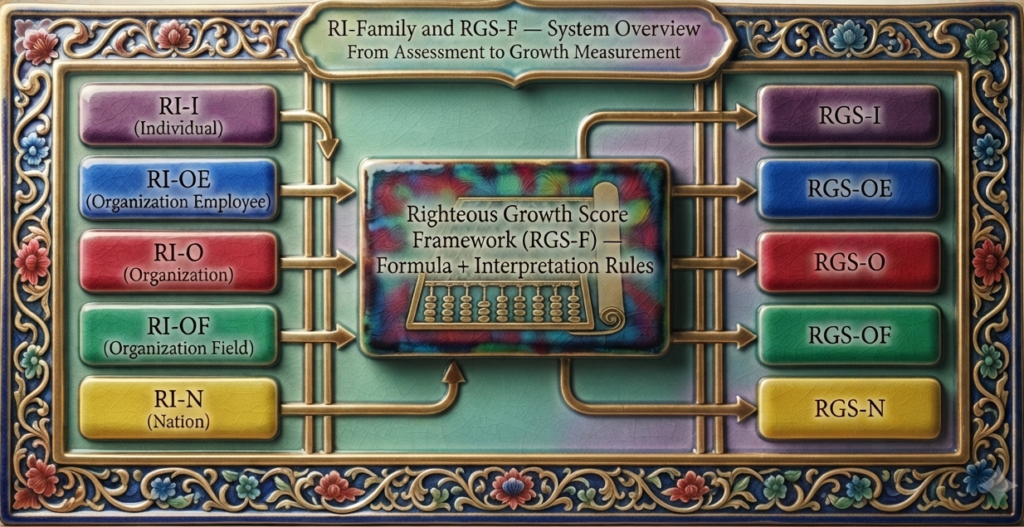
Figure 1.1 RI‑Family and RGS‑F — System Overview
1.3 Version History
Table 1.1 Version History of RGS‑F
| Version | Release Date | Key Changes |
|---|---|---|
| v0.5 | Q1 2026 | Initial Framework |
| v1.0 | Q3 2026 | Initial release with RGS-F framework |
| v1.1 | Q1 2027 | Refined questions; improved weighting |
2. Framework Overview
2.1 Core Concept
The RGS‑F is built on a simple but powerful idea: righteousness is not static; it grows or declines over time. By comparing current and previous RI‑X scores, we can quantitatively assess whether an entity is moving toward or away from righteousness.
2.2 The RI‑Family and RGS
The RI‑Family indices measure the absolute level of righteousness at a given point in time. The RGS measures the rate of change. Together, they provide a complete picture: the current state plus the trajectory.
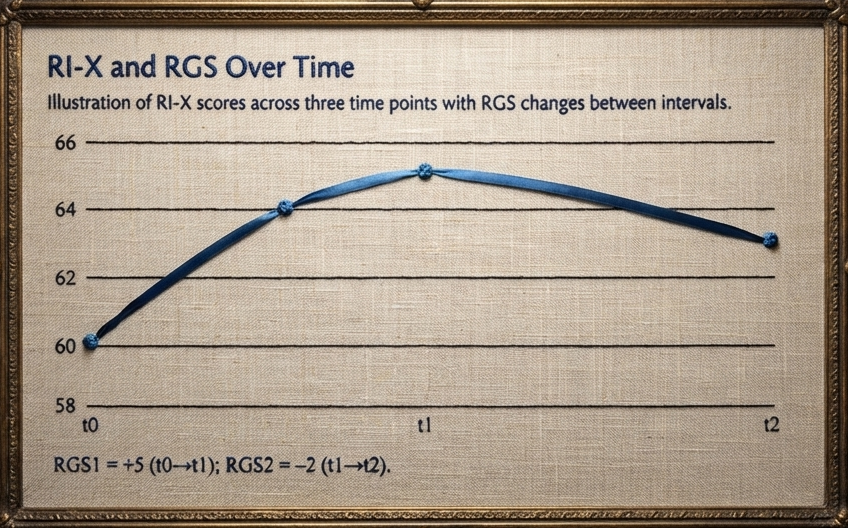
Figure 2.1 RI-X and RGS Over Time
Figure 2.1. RI-X and RGS Over Time. The figure illustrates changes in the Righteousness Index (RI-X) across three observation periods. The RI-X increases from 60 at t0 to 65 at t1, corresponding to RGS₁ = +5, indicating a positive improvement in righteousness during the first interval. Subsequently, the RI-X decreases from 65 at t1 to 63 at t2, corresponding to RGS₂ = −2, indicating a slight decline in righteousness during the second interval. Positive RGS values represent improvement, whereas negative values indicate deterioration. This example demonstrates how the Righteousness Growth Score (RGS) captures dynamic changes in RI-X over time.
3. The Righteous Growth Score (RGS)
3.1 Definition
The Righteous Growth Score (RGS) is a quantitative metric that measures the change in an RI‑X score between two consecutive measurement periods.
It answers: “How much has righteousness grown (or declined) in this entity over time?”
3.2 Formula
For any index RI‑X (where X ∈ {I, OE, O, OF, N}):
RGS_X(t) = RI-X(t) – RI-X(t−1)
Where:
- t = current measurement period
- t−1 = previous measurement period
- All scores are on the same scale (e.g., 0–100)
3.3 Interpretation Rules
Table 3.1 Interpretation of RGS Values
| RGS Value | Interpretation |
|---|---|
| > 0 | Growth in righteousness |
| = 0 | No change / stagnation |
| < 0 | Decline in righteousness |
Magnitude indicates strength of change: the larger the absolute value, the more significant the shift.
3.4 Example Calculations
Example 1: National (RI‑N)
- RI‑N(2025) = 72.4
- RI‑N(2024) = 68.1
- RGS = 72.4 – 68.1 = +4.3 → moderate growth.
Example 2: Organization (RI‑O)
- RI‑O(2026) = 58.0
- RI‑O(2025) = 61.5
- RGS = 58.0 – 61.5 = –3.5 → decline.
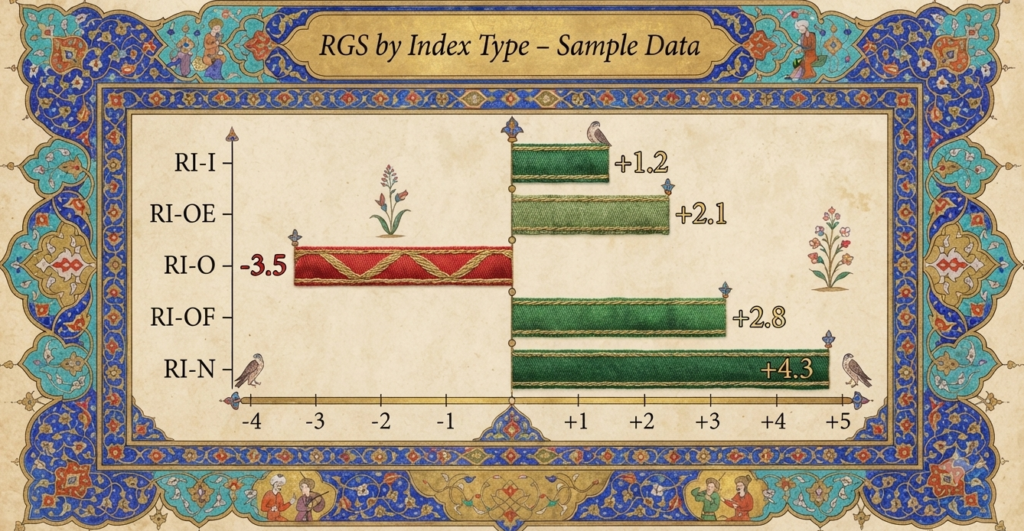
Figure 3.1 Righteous Growth Scores (RGS) by Index Type
The Figure 3.1 shows a bar chart comparing RGS values across different RI‑X types for a sample group.
3.5 Righteous Growth Rate (RGS Rate)
3.5.1 Definition
While the Righteous Growth Score (RGS) measures the absolute change in righteousness, the Righteous Growth Rate (RGS Rate) measures the relative change as a percentage of the previous period’s score.
It answers: “At what speed is righteousness growing or declining, relative to its starting point?”
This rate enables cross‑index comparison by neutralizing differences in baseline scores. For example, a country with a high RI‑N score may have a slower growth rate than a company with a low RI‑O score, revealing where momentum is strongest regardless of absolute standing.
3.5.2 Formula
For any index RI‑X (where X ∈ {I, OE, O, OF, N}):
Where:
- = current measurement period
- = previous measurement period
- The result is expressed as a percentage (%).
Note: This formula assumes all RI‑X scores are positive (> 0), which holds true under the 0–100 scoring scale used across the RI‑Family.
3.5.3 Interpretation Rules
Table 3.2 Interpretation of RGS Rate
| RGS Rate Value | Interpretation |
|---|---|
| > 0% | The entity experienced positive growth in righteousness. |
| = 0% | No change; stagnation. |
| < 0% | The entity experienced negative growth (decline) in righteousness. |
The magnitude of the percentage indicates the velocity of change. A 15% growth rate indicates strong momentum, while a –2% rate suggests mild erosion.
3.5.4 Why This Enables Cross‑Index Comparison
The RGS Rate provides a standardized metric that allows comparison across fundamentally different entities, even if their starting scores are vastly different. Table 3.3 illustrates this with a comparative example.
Table 3.3 Example: RGS vs. RGS Rate Across Different Index Types
| Entity | Index Type | RI‑X (t-1) | RI‑X (t) | RGS (Absolute) | RGS Rate (%) |
|---|---|---|---|---|---|
| Nation A | RI‑N | 80.0 | 84.0 | +4.0 | +5.0% |
| Org B | RI‑O | 40.0 | 45.0 | +5.0 | +12.5% |
| Indiv C | RI‑I | 55.0 | 58.0 | +3.0 | +5.5% |
| Field D | RI‑OF | 70.0 | 71.0 | +1.0 | +1.4% |
In Table 3.3, Organization B has the highest RGS Rate (12.5%), even though its absolute RGS (5.0) is not the largest. This indicates that Organization B is experiencing the fastest momentum toward righteousness, while Field D is growing much more slowly despite having a high absolute baseline.
The RGS Rate thus serves as a leading indicator for identifying where righteous transformation is accelerating, regardless of whether the entity is a nation, organization, or individual.
3.5.5 Application Note
The RGS Rate is most useful for:
- Trend analysis across different RI‑X types (e.g., comparing a nation’s improvement against a corporation’s)
- Benchmarking entities of different sizes or starting baselines
- Longitudinal studies where percentage growth is more informative than raw point changes
For quarterly or annual reporting, both RGS and RGS Rate should be presented together to provide a complete picture: where the entity stands (RGS) and how fast it is moving (RGS Rate).
4. RI‑Family Indices – Dimensions and Descriptions
This section defines the dimensions for each RI‑X index. All dimensions are scored on a 0–100 scale. Weighting is handled by each index’s own assessment methodology.
4.1 RI‑I — Righteous Index for Individual
The RI‑I measures the righteousness of a single person based on their character, actions, and relationships.
Table 4.1 Dimensions of RI‑I
| Dimension | Description |
|---|---|
| Honesty and Truthfulness | The degree to which the individual consistently speaks and acts truthfully, avoids deception, and admits mistakes. |
| Empathy and Compassion | The ability to understand others’ feelings and act with kindness, especially toward the vulnerable. |
| Courage and Moral Conviction | Willingness to stand for what is right, even under social, professional, or physical pressure. |
| Reliability and Loyalty | Dependability in fulfilling commitments and faithfulness to people, principles, and values. |
| Responsibility and Accountability | Ownership of one’s actions, decisions, and their consequences, without shifting blame. |
| Respect for Others | Treating all people with dignity, regardless of status, background, or disagreement. |
4.2 RI‑OE — Righteous Index for Organization Employee
The RI‑OE measures the righteousness of employees within an organization, focusing on their conduct, ethics, and treatment of others.
Table 4.2 Dimensions of RI‑OE
| Dimension | Description |
|---|---|
| Workplace Integrity | Honesty and ethical behavior in daily work tasks, communications, and reporting. |
| Respect for Colleagues | Treating coworkers with dignity, avoiding harassment, discrimination, or bullying. |
| Whistleblower Protection | Willingness to report unethical behavior and the organizational culture that supports it. |
| Compliance with Policies | Adherence to organizational codes of conduct, HR policies, and legal requirements. |
| Conflict Resolution Ethics | Handling disagreements fairly, transparently, and without retaliation. |
| Loyalty and Confidentiality | Respecting proprietary information and maintaining appropriate boundaries of trust. |
4.3 RI‑O — Righteous Index for Organization
The RI‑O measures the righteousness of an organization as a whole, including its governance, culture, and external impact.
Table 4.3 Dimensions of RI‑O
| Dimension | Description |
|---|---|
| Ethical Governance | The presence of clear ethical frameworks, board oversight, and leadership accountability. |
| Transparency and Reporting | Openness about operations, finances, decision‑making, and performance. |
| Fair Treatment of Stakeholders | Equitable treatment of employees, customers, suppliers, and communities. |
| Compliance Culture | Systemic adherence to laws, regulations, and internal policies. |
| Sustainability Practices | Environmental and social responsibility in long‑term strategy and operations. |
| Social Impact | Contribution to the well‑being of communities and society beyond core business. |
4.4 RI‑OF — Righteous Index for Organization Field
The RI‑OF measures the righteousness of a professional or industrial field (e.g., healthcare, finance, sports..) and its collective standards and practices.
Table 4.4 Dimensions of RI‑OF
| Dimension | Description |
|---|---|
| Codes of Conduct | Existence and enforcement of professional standards and ethical guidelines. |
| Peer Review and Quality Control | Mechanisms for self‑regulation, accountability, and continuous improvement within the field. |
| Ethical Innovation | Practices that ensure new technologies, methods, or strategies align with human dignity and fairness. |
| Public Trust | The field’s reputation for honesty, reliability, and competence among the general public. |
| Inclusivity and Diversity | Representation of diverse groups and equitable access to opportunities within the field. |
| Field‑Specific Values | Unique ethical principles relevant to the field (e.g., sportsmanship in baseball, transparency in AI, confidentiality in healthcare). |
4.5 RI‑N — Righteous Index for Nation
The RI‑N measures the righteousness of a country, focusing on its institutions, legal systems, and social fabric.
Table 4.5 Dimensions of RI‑N
| Dimension | Description |
|---|---|
| Integrity of Institutions | The extent to which public institutions operate without corruption, bias, or self‑interest. |
| Justice and Rule of Law | Fairness and consistency in legal systems, enforcement, and judicial independence. |
| Protection of Human Rights | Safeguarding civil, political, and economic rights for all citizens and residents. |
| Social Trust and Cohesion | The level of mutual trust, community engagement, and social solidarity. |
| Government Accountability | Mechanisms for holding public officials responsible for their actions and decisions. |
| Environmental Stewardship | National policies and practices that protect natural resources and address climate change. |
5. Weighting Systems for RI‑X (Reference Only)
The RGS formula does not itself include any weighting. However, the underlying RI‑X scores that feed into RGS are derived from weighted dimension scores. Each RI‑X index has its own weighting scheme, which is defined in its respective methodology document.
Table 5.1 Reference: Example Weighting Scheme for RI‑N
| Dimension | Weight |
|---|---|
| Integrity of Institutions | 25% |
| Justice and Rule of Law | 25% |
| Protection of Human Rights | 20% |
| Social Trust and Cohesion | 15% |
| Government Accountability | 10% |
| Environmental Stewardship | 5% |
Note: This table is provided for illustration only. For full details, refer to the RI‑N methodology document. RGS itself does not apply any weight.
6. Version Management Policy
6.1 Versioning Scheme
We follow a semantic versioning scheme adapted for frameworks:
- Major version (X.0) – Incompatible changes to formula, dimensions, or interpretation.
- Minor version (x.Y) – Additions (new RI‑X types, new dimensions) without breaking existing calculations.
- Patch version (x.y.Z) – Clarifications, typo fixes, data corrections that do not affect scores.
6.2 Backward Compatibility
- Minor and patch updates will preserve the ability to recalculate historical RGS values.
- Major updates will be explicitly documented and may require recalculation of prior data.
- A migration guide will be provided for major version updates.
6.3 Deprecation Schedule
- Old minor versions remain valid for at least 3 years after a new major version is released.
- Users are encouraged to adopt the latest stable version.
7. References
- WiseRighteous Network. (2026). Righteousness National Framework System (RNFS) – v1.0.
- Kuo, C.‑M. (2025). Foundations of a Righteous Index. WiseRighteous Network.
- Transparency International. (2025). Corruption Perceptions Index Methodology.
- World Bank. (2024). Worldwide Governance Indicators – Rule of Law.
- United Nations Development Programme. (2023). Human Development Report – Justice and Trust.
- Rawls, J. (1971). A Theory of Justice. Harvard University Press.