Version: 0.5 (Q1, 2026)
A Practical Tool for Measuring and Growing Righteousness in Individuals and Organizations
How the Righteous Growth Score Translates the RSS Standard and RMF Framework into Actionable, Measurable Insights
Abstract
The Righteous Growth Score (RGS) is a practical assessment tool designed to measure and track righteousness growth in individuals and organizations. Grounded in the Righteous Standards System (RSS) and the Righteous Motivation Framework (RMF), RGS provides a structured, evidence-based approach to understanding where individuals and organizations stand in their righteous journey and how they can grow. This article introduces the RGS framework, explains its assessment dimensions and scoring methodology, and provides practical guidance for using RGS results to drive personal and organizational growth. When righteousness can be measured, it can be managed—and when it is managed, it can be grown.
Chapter 1: Introduction — Why Measure Righteousness?
Righteousness is often discussed as an abstract ideal—a moral aspiration that sounds noble but feels difficult to implement. Leaders speak of integrity, honesty, and trust, yet struggle to answer a fundamental question:
“How do we know if we are actually growing in righteousness?”
This is not a trivial question. In business, government, education, and sports, the gap between stated values and actual behavior is often wide. Organizations claim to value integrity, yet unethical behavior persists. Leaders speak of trust, yet employees feel betrayed. Teams profess unity, yet fractures remain hidden beneath the surface.
You cannot grow what you do not measure.
The Righteous Growth Score (RGS) addresses this gap. It is a practical, structured tool designed to measure and track righteousness growth in individuals and organizations. Grounded in the Righteous Standards System (RSS) and the Righteous Motivation Framework (RMF), RGS provides:
- A clear baseline — Where do we stand today?
- A growth trajectory — Are we improving over time?
- Actionable insights — What specific areas need attention?
- A common language — A shared framework for discussing righteousness
This article introduces the RGS framework, explains its assessment dimensions and scoring methodology, and provides practical guidance for using RGS results to drive personal and organizational growth.
Chapter 2: What Is the Righteous Growth Score (RGS)?
The Righteous Growth Score (RGS) is a measurement tool designed to assess and track growth in righteousness across multiple dimensions. Unlike static assessments that provide a single snapshot, RGS emphasizes growth over time—measuring not just where you are, but how you are progressing.
Table 1: Core Features of RGS
| Feature | Description |
|---|---|
| Multi-dimensional | Measures righteousness across multiple dimensions derived from RSS and RMF |
| Growth-oriented | Tracks progress over time, not just static snapshots |
| Actionable | Provides specific insights for personal and organizational development |
| Evidence-based | Grounded in established research and frameworks |
| Flexible | Applicable to individuals, teams, and organizations across sectors |
What RGS Measures
RGS measures righteousness across dimensions that correspond to both the RSS seven layers and the RMF five clusters. It assesses:
Table 2: RGS Mapping to RSS and RMF
| Dimension | What It Measures |
|---|---|
| Inner Core Strength | Personal values, integrity, and self-mastery |
| Relational Trust | Trust, respect, and connection with others |
| Meaning & Purpose | Sense of meaning, contribution, and achievement |
| Ethical Courage | Willingness to stand firm and act with integrity |
| Resilience & Growth | Ability to persevere and grow through challenges |
| Structural Alignment | Organizational systems and processes that support righteousness |
| Assurance & Verification | Mechanisms for evaluating and verifying righteous practice |
The table 3 provides a high-level summary of what RGS measures, who it is for, and how it works.
Table 3: RGS Overview — At a Glance
| Aspect | Description |
|---|---|
| Purpose | To measure and track growth in righteousness |
| Target Users | Individuals, teams, organizations, institutions |
| Core Dimensions | 7 dimensions mapped to RSS and RMF |
| Scoring Scale | 5-point Likert scale (1 = Strongly Disagree, 5 = Strongly Agree) |
| Time Frame | Assessment completed in 15–20 minutes |
| Output | Individual or organizational report with scores, insights, and action recommendations |
| Growth Tracking | Recommended re-assessment every 3–6 months |
Chapter 3: The RGS Framework — How It Maps to RSS and RMF
RGS is not a standalone tool—it is the measurement arm of the RSS standard and RMF framework. It translates the abstract concepts of RSS and RMF into concrete, measurable dimensions.
The table 4 shows how RGS assessment dimensions connect to specific RSS layers and RMF clusters.
Table 4: RGS Mapping to RSS and RMF
| RGS Dimension | RSS Layer | RMF Cluster | What It Measures |
|---|---|---|---|
| Inner Core Strength | Layer 1: Fundamentals Layer 2: Foundation | Inner Core | Personal values, integrity, self-mastery |
| Relational Trust | Layer 3: Alignment Layer 6: Assurance | Relational | Trust, respect, connection with others |
| Meaning & Purpose | Layer 3: Alignment Layer 4: Structure | Meaning & Achievement | Sense of meaning, contribution, achievement |
| Ethical Courage | Layer 2: Foundation Layer 6: Assurance | Ethical Foundation | Moral courage, accountability, leadership |
| Resilience & Growth | Layer 5: Process Layer 7: Restoration | Resilience & Growth | Perseverance, learning, adaptability |
| Structural Alignment | Layer 4: Structure Layer 5: Process | All clusters | Organizational systems and processes |
| Assurance & Verification | Layer 6: Assurance | All clusters | Mechanisms for evaluation and verification |
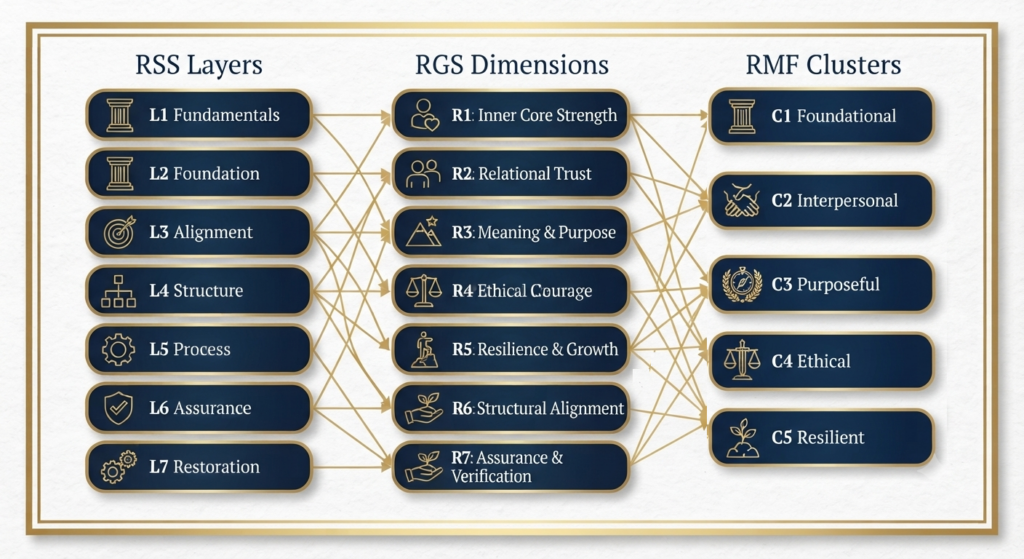
Figure 1: The Righteous Growth Score Framework
This visual diagram shows how RGS connects the RSS layers and RMF clusters into a unified measurement framework.
Chapter 4: The RGS Assessment Dimensions
RGS measures righteousness across seven core dimensions. Each dimension is derived from the RSS layers and RMF clusters, providing a comprehensive picture of righteous growth.
The table 5 presents the seven RGS assessment dimensions with their definitions and key focus areas.
Table 5: RGS Assessment Dimensions
| Dimension | Definition | Key Focus Areas |
|---|---|---|
| 1. Inner Core Strength | The foundation of personal values, integrity, and self-mastery | Values clarity, integrity, authenticity, self-discipline |
| 2. Relational Trust | The quality of trust, respect, and connection with others | Trustworthiness, respect, belonging, empathy |
| 3. Meaning & Purpose | The sense of meaning, contribution, and achievement in work and life | Purpose, contribution, excellence, recognition |
| 4. Ethical Courage | The willingness to stand firm and act with integrity under pressure | Moral courage, accountability, honesty, transparency |
| 5. Resilience & Growth | The ability to persevere, learn, and grow through challenges | Resilience, adaptability, perseverance, learning |
| 6. Structural Alignment | The organizational systems and processes that support righteousness | Governance, roles, responsibilities, processes |
| 7. Assurance & Verification | The mechanisms for evaluating and verifying righteous practice | Measurement, feedback, auditing, improvement |
The table 6 provides example assessment questions for each RGS dimension.
Table 6: RGS Sample Questions
| Dimension | Sample Questions |
|---|---|
| Inner Core Strength | I stay true to my values even under pressure. My actions consistently align with my stated values. I have a clear sense of what I stand for. |
| Relational Trust | People trust me to follow through on my commitments. I treat others with respect and dignity. I feel a sense of belonging in my team or organization. |
| Meaning & Purpose | My work gives me a sense of purpose. I feel that I am making a meaningful contribution. I am proud of what I accomplish. |
| Ethical Courage | I speak up when I see something wrong. I take responsibility for my actions. I am honest even when it is difficult. |
| Resilience & Growth | I bounce back from setbacks quickly. I learn from my mistakes. I am adaptable when circumstances change. |
| Structural Alignment | Our organization has clear roles and responsibilities. Our processes support ethical decision-making. Our governance structures ensure accountability. |
| Assurance & Verification | We regularly evaluate our ethical performance. We have mechanisms for feedback and improvement. We verify that our values are being practiced. |
Chapter 5: The RGS Scoring Methodology
RGS uses a 5-point Likert scale for each assessment question. This provides a balanced range for respondents to express their level of agreement or disagreement.
The table 7 defines the 5-point Likert scale used in RGS assessments.
Table 7: RGS Scoring Scale
| Score | Label | Meaning |
|---|---|---|
| 5 | Strongly Agree | The statement is consistently true in my experience |
| 4 | Agree | The statement is mostly true in my experience |
| 3 | Neutral | The statement is neither true nor false in my experience |
| 2 | Disagree | The statement is mostly false in my experience |
| 1 | Strongly Disagree | The statement is consistently false in my experience |
Table 8: Calculating Scores
| Score Type | Calculation | Purpose |
|---|---|---|
| Dimension Score | Average of all questions within a dimension | Understand strength in each specific area |
| Overall RGS | Average of all dimension scores | Understand overall righteous growth level |
| Growth Score | Comparison between Time 1 and Time 2 assessments | Measure progress over time |
Table 9: Interpreting Score Ranges
| Range | Level | Meaning |
|---|---|---|
| 4.5 – 5.0 | Strong | Significant strength in this area |
| 3.5 – 4.4 | Developing | Building strength; room for growth |
| 2.5 – 3.4 | Emerging | Foundational elements present; significant growth needed |
| 1.0 – 2.4 | Needs Attention | Critical area requiring focused development |
This flowchart shows the step-by-step process of taking and using the Righteous Growth Score assessment.
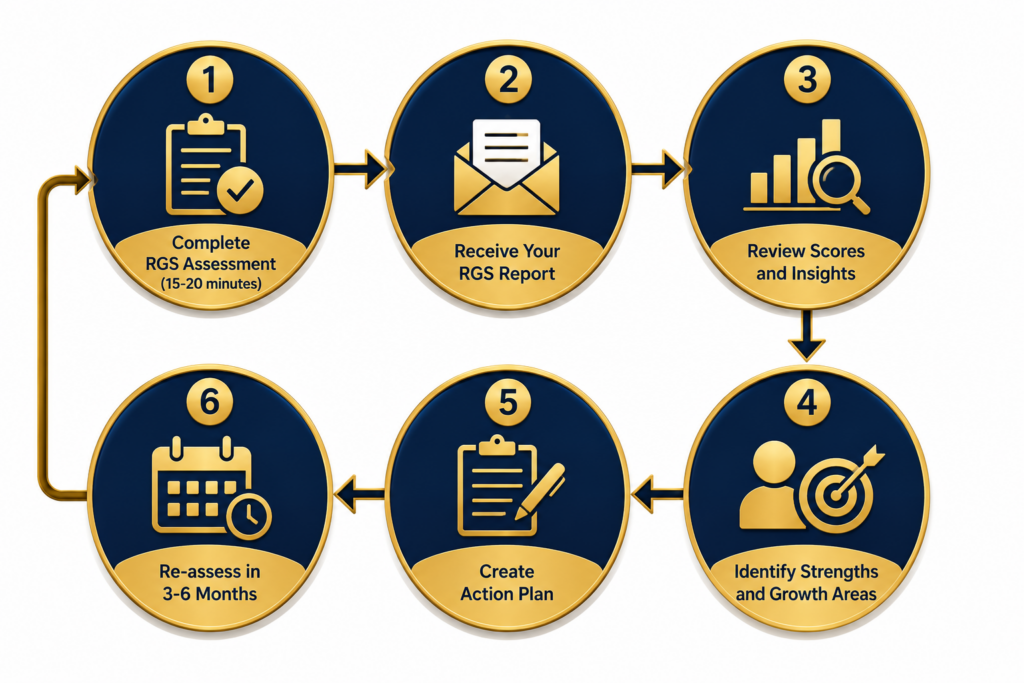
Figure 2: The RGS Assessment Process
Chapter 6: How to Interpret Your RGS Results
Understanding your RGS results is the first step toward meaningful growth. This chapter provides guidance on interpreting individual and organizational RGS reports.
This table provides guidance on what different score ranges mean for each RGS dimension.
Table 10: RGS Score Interpretation Guide
| Score Range | Interpretation | Recommended Action |
|---|---|---|
| 4.5 – 5.0 | This dimension is a significant strength. The individual or organization consistently demonstrates righteous behavior in this area. | Maintain and reinforce; consider mentoring others in this area. |
| 3.5 – 4.4 | This dimension is developing. There is evidence of righteous behavior, but it is not yet consistent or fully embedded. | Continue building; identify specific areas for improvement. |
| 2.5 – 3.4 | This dimension is emerging. Foundational elements are present, but significant gaps remain. | Prioritize development; create a focused improvement plan. |
| 1.0 – 2.4 | This dimension needs urgent attention. Righteous behavior in this area is inconsistent or absent. | Immediate action required; consider external support or coaching. |
Table 11: Individual Report Patterns
| Pattern | Indication | Suggested Action |
|---|---|---|
| High Inner Core, Low Relational | Strong personal integrity but difficulty building trust with others | Focus on communication, empathy, and team-building |
| High Meaning, Low Ethical Courage | Strong purpose but hesitancy to speak up or act under pressure | Develop courage through small acts of speaking up |
| High Resilience, Low Structural Alignment | Strong personal resilience but weak organizational systems | Work with organization to improve governance and processes |
| High Relational, Low Assurance | Strong relationships but weak verification mechanisms | Implement regular feedback and evaluation processes |
Table 12: Organizational Report Patterns
| Pattern | Indication | Suggested Action |
|---|---|---|
| High Inner Core, Low Alignment | Strong individual values but weak organizational systems | Focus on aligning systems and incentives with values |
| High Relational, Low Assurance | Strong relationships but no measurement of ethical performance | Implement RGS or similar assessment tools |
| High Resilience, Low Structural Alignment | Strong culture of resilience but weak governance | Review and strengthen governance structures |
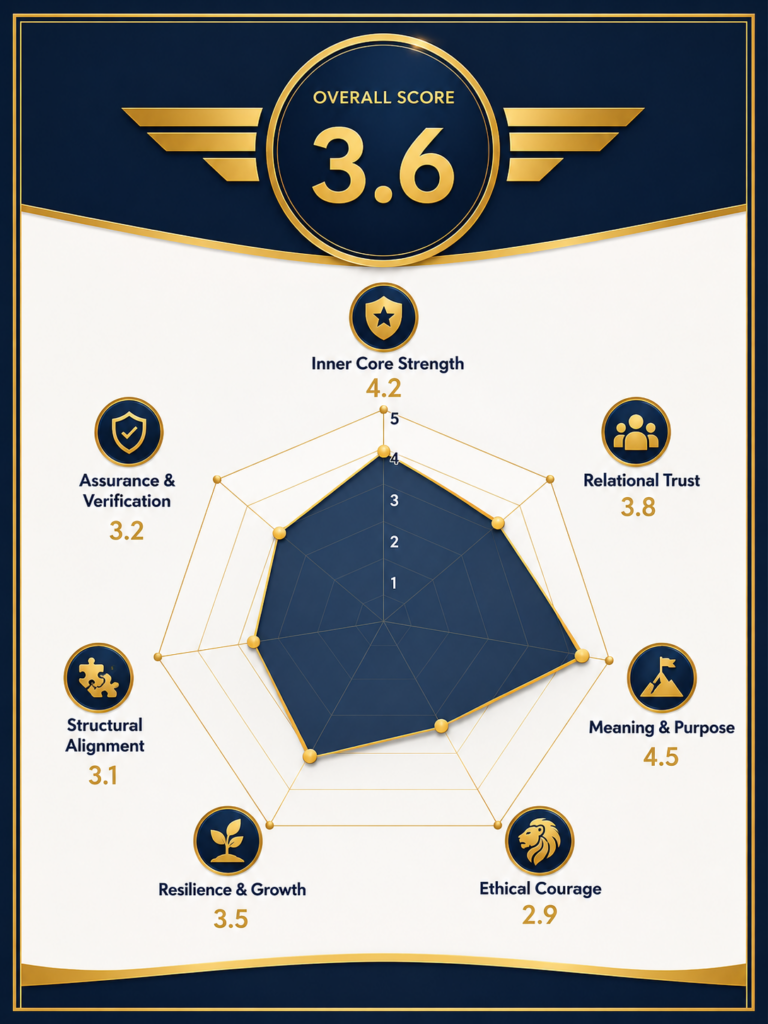
Figure 3: Sample RGS Report — Individual
This is a mock-up of an individual RGS report showing scores across all seven dimensions with visual indicators.
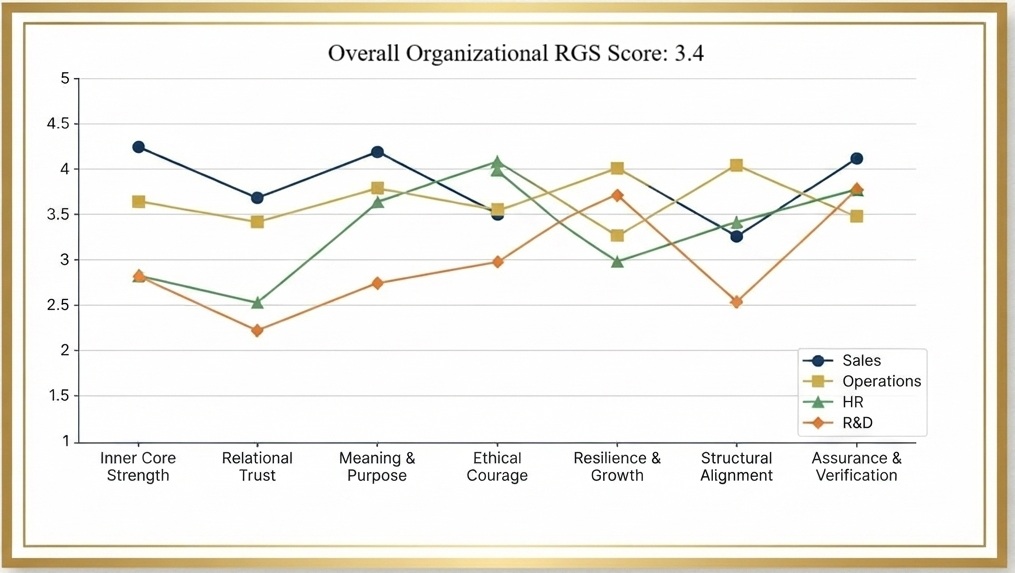
Figure 4: Sample RGS Report — Organization
This is a mock-up of an organizational RGS report showing team or company scores across all seven dimensions.
Chapter 7: How to Use RGS for Personal Growth
RGS is a powerful tool for personal development. This chapter provides practical guidance for individuals using RGS results to grow in righteousness.
Table 13: Step-by-Step Personal Growth Plan
| Step | Action | Description |
|---|---|---|
| 1 | Complete RGS assessment | Take the assessment honestly, reflecting on your current state |
| 2 | Review your results | Identify strengths and areas for growth |
| 3 | Select 1-2 priority areas | Focus on areas with the most need or potential for growth |
| 4 | Create specific goals | Define clear, measurable goals for each priority area |
| 5 | Identify resources and support | Determine what you need to achieve your goals |
| 6 | Take action | Implement your plan |
| 7 | Re-assess in 3-6 months | Track progress and adjust your plan as needed |
The table 14 provides a completed example of an RGS personal growth action plan using sample scores and goals, demonstrating how to translate RGS results into concrete action steps.
Table 14: RGS Personal Growth Action Plan Template
| RGS Dimension | Score | Priority (Y/N) | Goal | Action Steps | Resources Needed | Target Date |
|---|---|---|---|---|---|---|
| Inner Core Strength | 4.2 | N | Maintain this strength | Continue journaling on values; mentor others on integrity | Journal, mentor training | Ongoing |
| Relational Trust | 3.8 | N | Build on existing trust | Attend one team-building event; schedule regular check-ins with team | Team calendar, manager support | 3 months |
| Meaning & Purpose | 4.5 | N | Sustain high purpose | Share what gives meaning to work with team; lead one purpose-driven project | Project budget, team buy-in | 6 months |
| Ethical Courage | 2.9 | Y | Increase ability to speak up under pressure | Practice speaking up once per week; join a peer coaching group; role-play difficult conversations | Peer coach, mentor, practice partner | 6 months |
| Resilience & Growth | 3.5 | N | Build resilience | Read one book on resilience; learn from one setback per week | Books, support network | 3 months |
| Structural Alignment | 3.1 | Y | Understand and improve organizational alignment | Meet with supervisor to clarify roles; review organizational processes | Supervisor, process documents | 6 months |
| Assurance & Verification | 3.2 | Y | Develop feedback and measurement habits | Ask for feedback weekly; track one improvement metric | Feedback forms, dashboard | 6 months |
Chapter 8: How to Use RGS for Organizational Growth
RGS is equally valuable for organizations seeking to build a culture of righteousness. This chapter provides practical guidance for leaders and HR professionals.
Table 15: Step-by-Step Organizational Growth Plan
| Step | Action | Description |
|---|---|---|
| 1 | Administer RGS organization-wide | Ensure participation across levels and departments |
| 2 | Aggregate and analyze results | Review patterns across the organization |
| 3 | Identify organizational strengths and gaps | Determine areas of excellence and areas needing attention |
| 4 | Set organizational goals | Define specific, measurable goals for improvement |
| 5 | Develop action plans | Create plans for each priority area |
| 6 | Implement initiatives | Roll out programs, training, or system changes |
| 7 | Re-assess in 6-12 months | Track progress and adjust strategies as needed |
The table 16 provides a completed example of an RGS organizational growth action plan using sample scores and initiatives, demonstrating how to translate organizational RGS results into concrete action steps.
Table 16: RGS Organizational Growth Action Plan Template
| RGS Dimension | Organizational Score | Priority (Y/N) | Goal | Action Initiatives | Responsible Party | Target Date |
|---|---|---|---|---|---|---|
| Inner Core Strength | 3.9 | N | Maintain and strengthen individual values across the organization | Continue values-based hiring; quarterly values workshops | HR Department | Ongoing |
| Relational Trust | 3.4 | Y | Improve trust and connection across all departments | Implement cross-functional team-building; establish peer mentorship program | HR + Department Heads | 12 months |
| Meaning & Purpose | 4.0 | N | Sustain high purpose across teams | Share impact stories monthly; connect work to organizational mission | Communications Team | Ongoing |
| Ethical Courage | 2.9 | Y | Build a culture where employees feel safe speaking up | Establish anonymous reporting system; train managers on psychological safety; recognize ethical courage publicly | HR + Legal + Senior Leadership | 12 months |
| Resilience & Growth | 3.5 | N | Build organizational resilience | Implement learning from failures process; provide resilience training | HR + Learning & Development | 6 months |
| Structural Alignment | 3.0 | Y | Clarify roles, responsibilities, and governance | Review and update organizational structure; clarify decision-making authority; establish clear accountability frameworks | CEO + Senior Leadership | 12 months |
| Assurance & Verification | 3.2 | Y | Establish regular evaluation and feedback mechanisms | Implement annual RGS assessment; create feedback loops for continuous improvement | HR + Operations | 6–12 months |
Table 17: Common Organizational Applications
| Application | How RGS Helps |
|---|---|
| Culture Transformation | Provides baseline and progress metrics for culture change |
| Leadership Development | Identifies leadership strengths and development areas |
| Team Building | Reveals team dynamics and trust levels |
| Talent Development | Supports individual development planning |
| Organizational Health Assessment | Provides a comprehensive view of organizational health |
| Change Management | Tracks how change affects organizational righteousness |
Chapter 9: Real-World Impact — Case Studies
The RGS framework is grounded in real-world practice. This chapter presents case studies showing how organizations and individuals have used righteousness assessments to drive change.
Case Study 1: Business — A Manufacturing Company’s Culture Transformation
A mid-sized manufacturing company was experiencing high turnover and low employee engagement. Leaders suspected that the gap between stated values and actual practice was contributing to the problem.
Action: The company administered an RGS assessment across all levels. Results revealed a significant gap between “Inner Core Strength” (high) and “Structural Alignment” (low)—employees had strong personal values but felt organizational systems did not support them.
Response: The company redesigned its performance management system to reward ethical behavior, not just output. They also implemented regular feedback mechanisms.
Result: After 12 months, RGS scores in “Structural Alignment” increased by 25%, turnover decreased by 30%, and employee engagement scores improved significantly.
Case Study 2: Public Sector — A Government Agency’s Trust Initiative
A government agency was facing a crisis of public trust. Citizens felt the agency was unresponsive and untrustworthy.
Action: The agency administered an RGS assessment to both employees and citizens to understand the trust gap.
Results: “Relational Trust” scores were consistently low from both perspectives. Employees felt they lacked the resources to serve effectively, and citizens felt they were not being heard.
Response: The agency implemented new communication channels, provided additional training for front-line staff, and established a citizen advisory board.
Result: After 18 months, RGS scores in “Relational Trust” improved by 30%, and public satisfaction surveys showed significant improvement.
Case Study 3: Education — A School’s Character Development Program
A school was committed to character development but lacked a way to measure progress. They wanted to ensure their efforts were actually making a difference.
Action: The school administered the RGS to students and teachers at the beginning and end of the school year.
Results: “Inner Core Strength” and “Ethical Courage” scores were lower than expected for older students, indicating that character development was not keeping pace with academic growth.
Response: The school integrated character development into the curriculum, with specific attention to ethical courage and integrity.
Result: After one year, “Ethical Courage” scores increased by 20%, and teachers reported more students speaking up about ethical concerns.
Chapter 10: Conclusion — RGS as Your Compass for Righteous Growth
The Righteous Growth Score is more than a measurement tool—it is a compass for individuals and organizations seeking to grow in righteousness.
Table 18: Key Takeaways
| Lesson | Implication |
|---|---|
| Measurement enables growth | You cannot grow what you do not measure |
| RGS is grounded in RSS and RMF | It translates theory into practice |
| RGS is flexible | It applies to individuals, teams, and organizations |
| RGS is actionable | Results lead to specific growth plans |
| Growth is a journey | RGS tracks progress over time |
The Bigger Picture
When righteousness is measured, it can be managed. When it is managed, it can be grown. The Righteous Growth Score provides the structure, the language, and the insights needed to turn the aspiration of righteousness into the reality of growth.
“Righteousness is not a destination—it is a continuous journey of growth, refinement, and commitment. RGS is your compass.”
A Final Reflection
The Righteous Growth Score is not an end in itself. It is a beginning—a starting point for a journey toward greater integrity, deeper trust, and more meaningful impact. Whether you are an individual seeking to align your actions with your values, or a leader striving to build a culture of righteousness within your organization, RGS offers a clear and practical path forward.
It begins with a single step: the willingness to measure what matters. From there, growth becomes not just possible, but inevitable.
Invitation
If you are interested in using RGS for yourself, your team, or your organization, Righteous Advisory can help you:
- Administer the RGS assessment
- Interpret your results
- Develop a personalized growth plan
- Track progress over time
References
Cann, A., Calhoun, L. G., Tedeschi, R. G., & Solomon, D. T. (2010). Posttraumatic growth and depreciation as independent experiences and predictors of well-being. Journal of Loss and Trauma, 15(3), 151–166.
Righteous Advisory. (2026). Righteous Motivation Framework (RMF). https://advisory.wiserighteous.org/
Righteous Advisory. (2026). RSS Standard Catalog. https://advisory.wiserighteous.org/standard-catalog/
Streib, H., Hood, R. W., & Klein, C. (2010). The Religious Schema Scale: Construction and initial validation of a new measure for religious styles. International Journal for the Psychology of Religion, 20(2), 99–116.
Tedeschi, R. G., & Calhoun, L. G. (1996). The Posttraumatic Growth Inventory: Measuring the positive legacy of trauma. Journal of Traumatic Stress, 9(3), 455–471.