
Applying the Righteousness Index to Character, Power, and Leadership
Righteous Advisory — Case Study
Abstract
What makes a person righteous? Is righteousness simply being a “good person”? Is it having good intentions? Is it obeying rules? Is it possessing power and using it effectively? Or does righteousness require something deeper: consistent character, responsible relationships, proper use of authority, trustworthy action, accountability, and the capacity to recover after failure? This case study applies the proposed Righteousness Index (RI) framework to selected characters in J. R. R. Tolkien’s The Lord of the Rings. The purpose is not to measure Tolkien’s characters numerically or to claim that Tolkien himself used the RI framework. Rather, the novel provides a rich literary case through which the seven RI dimensions can be explored:
Fundamentals, Foundation, Alignment, Structure, Process, Assurance, and Restoration. Five characters are examined in particular: Samwise Gamgee, Aragorn, Frodo, Boromir, and Gollum. Sam illustrates righteousness through service and loyalty without formal authority. Aragorn illustrates the relationship between righteousness and responsible power. Frodo illustrates the endurance of righteousness under sustained pressure — carrying a burden that cannot be set down, and continuing even when hope fades. Boromir demonstrates how legitimate intentions can become compromised by temptation and how recognition of failure can create an opportunity for restoration. Gollum illustrates the destructive consequences of repeated compromise and an increasingly unhealthy relationship with power and possession.
The case study then moves beyond literature to ask what these patterns can teach ordinary people and leaders. The analysis suggests that righteousness should not be understood as a simple binary category of “good” and “bad.” Instead, righteousness can be examined as a multidimensional and dynamic pattern of values, choices, relationships, responsibility, power, accountability, and restoration.
The broader purpose of this case study is theory development. If similar dimensions repeatedly appear across literature, history, leadership, organizations, and real-world events, they may provide a foundation for developing a more general theory of righteousness and, eventually, a more rigorous Righteousness Index.
Keyword: RI, Case Study, Righteousness, The Lords of the Rings
1. Case Study Purpose
This article is part of the Righteous Advisory Case Studies series.
Righteous Advisory uses case studies to examine righteousness in concrete situations rather than discussing righteousness only as an abstract philosophical idea.
Literature provides an especially useful starting point because stories allow readers to observe people—or fictional characters—making decisions under pressure.
The Lord of the Rings is particularly useful because its characters repeatedly confront:
- power;
- temptation;
- fear;
- loyalty;
- responsibility;
- leadership;
- sacrifice;
- failure;
- forgiveness;
- and restoration.
Tolkien’s work has long attracted moral, philosophical, religious, and political interpretation. Scholarship has examined themes including power, corruption, virtue, humility, stewardship, and moral choice. Tolkien himself also described The Lord of the Rings as a fundamentally religious and Catholic work, although he deliberately embedded those concerns within the story rather than turning it into an explicit theological allegory. (U.S. Copyright Office)
Righteous Advisory approaches the work from a different direction.
The central question is:
Can a multidimensional framework help us identify recurring patterns of righteousness in human behavior?
The purpose is therefore not simply to explain Tolkien.
The purpose is to use Tolkien as a case study for understanding righteousness.
2. Why Literature Can Help Us Study Righteousness
People often learn moral concepts through stories long before they encounter formal theories.
A reader may understand loyalty by watching Sam remain with Frodo.
A reader may understand responsible leadership by observing Aragorn.
A reader may understand temptation by observing Boromir.
A reader may understand the consequences of repeated compromise through Gollum.
A reader may understand the endurance of righteousness under sustained pressure by watching Frodo carry a burden that cannot be set down, and continue even when hope fades.
The advantage of a story is that it provides a sequence of decisions.
Instead of asking only:
“Is this character good?”
we can ask:
- What does this person value?
- What happens when those values are tested?
- What choices does the person make?
- How does the person use power?
- How do those choices affect others?
- Can other people depend on the person?
- What happens after failure?
- Does the person change?
These questions move righteousness analysis from labels toward observable patterns.
3. The RI Seven-Dimensional Framework
The Righteousness Index framework used in this case study contains seven dimensions.
Table 1. The Seven RI Dimensions for Character and Leadership Analysis
| RI Dimension | Working Definition | Question for the Case Study |
|---|---|---|
| Fundamentals | Basic orientation toward life, dignity, responsibility, and core values | What fundamental values guide the person? |
| Foundation | Integrity and stable character underlying decisions | How stable are those values under pressure? |
| Alignment | Consistency between values, responsibilities, decisions, and actions | Do actions correspond with stated values and responsibilities? |
| Structure | Roles, authority, relationships, and distribution of power | How does the person obtain, exercise, or respond to power? |
| Process | Quality of judgment and decision-making | How does the person make choices under pressure? |
| Assurance | Reliability, accountability, protection, and trustworthiness | Can other people depend on this person? |
| Restoration | Recognition, correction, recovery, reconciliation, and renewal | What happens after failure or harm? |
Description: Table 1 translates the seven RI dimensions into observable questions that can be applied to literary characters, leaders, organizations, and eventually real-world cases.
The dimensions are intentionally different.
A person might have strong values but make poor decisions.
A leader might possess substantial authority but misuse it.
A person might fail seriously but later demonstrate meaningful restoration.
Therefore, a single label such as “good” or “bad” cannot capture the entire pattern.
4. From Story to Righteousness Analysis
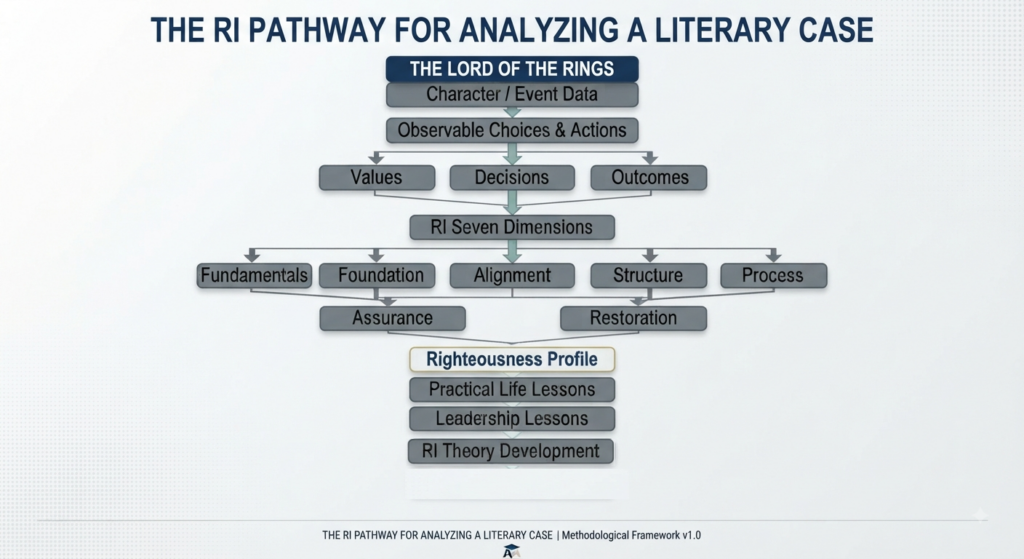
Figure 1. The RI pathway for analyzing a literary case
Figure 1 shows the central methodology. The analysis begins with observable narrative events rather than assigning a moral score. Events are examined through the seven RI dimensions, producing a multidimensional profile that can then generate practical and theoretical insights.
5. A Bird’s-Eye View of Righteousness in Middle-earth
Before examining individual characters, it is useful to step back.
The central conflict of The Lord of the Rings is not simply a military conflict.
It is also a conflict concerning power.
The Ring represents a form of power that creates extraordinary temptation.
This creates a fundamental leadership question:
What happens when someone possesses the ability to impose his or her will on others?
The story repeatedly suggests that the desire to dominate can corrupt even people who initially believe they want power for a good purpose.
This makes the Ring useful as a literary device for examining the relationship between:
power → intention → choice → consequence.
The story also complicates this picture.
Righteousness is not demonstrated only by powerful people.
Some of the most important acts come from ordinary individuals.
This creates two complementary questions:
Without power
Can a person remain righteous when nobody is watching and when there is little personal reward?
With power
Can a person remain righteous when they have the ability to control others?
Sam and Aragorn provide two different answers.
Boromir and Gollum provide two warnings.
6. Samwise Gamgee: Righteousness Through Service
Samwise Gamgee is one of the most useful characters for an RI case study because he demonstrates righteousness without formal political or military authority.
He is not initially a king.
He is not a great commander.
He does not possess the Ring.
His importance develops through service, loyalty, courage, and responsibility.
Tolkien scholarship has specifically explored the virtues associated with Hobbits, including humility, friendship, and service. (U.S. Copyright Office)
6.1 Fundamentals
Sam’s fundamental orientation is toward friendship, home, loyalty, and care for others.
His values are demonstrated through behavior rather than merely stated.
This provides a fundamental RI principle:
A value becomes meaningful for righteousness analysis when it produces observable choices.
6.2 Foundation
Sam repeatedly demonstrates a stable underlying commitment to Frodo.
His loyalty is tested by exhaustion, fear, danger, and uncertainty.
Yet his basic orientation remains remarkably consistent.
6.3 Alignment
Sam’s behavior repeatedly corresponds with his responsibilities.
He does not merely say that he is Frodo’s companion.
He acts as one.
This illustrates:
Value → Responsibility → Action
which is a useful way to understand alignment.
6.4 Structure
Sam possesses very little formal authority.
Yet he exercises significant moral influence.
This challenges the assumption that righteousness requires social status.
A person may have:
- little wealth;
- little authority;
- little recognition;
and still make an enormous positive contribution.
6.5 Process
Sam’s choices become particularly significant when circumstances become difficult.
He experiences fear and exhaustion but continues to make decisions oriented toward responsibility.
This suggests that righteousness should be examined especially under pressure.
6.6 Assurance
Sam becomes someone upon whom another person can depend.
That is a central concept in RI.
Righteousness is not only about what happens inside a person’s mind.
It affects whether others can safely depend upon that person.
6.7 Restoration
Sam’s story also points toward restoration.
The goal is not merely defeating an enemy.
Life and community must eventually be rebuilt.
This suggests:
Righteousness does not end when destruction ends; it participates in renewal.
Table 2. Samwise Gamgee — RI Character Analysis
| RI Dimension | Evidence Pattern | General-Life Lesson | Leadership Lesson |
|---|---|---|---|
| Fundamentals | Loyalty and care | Values should guide behavior | Leaders need clear fundamental values |
| Foundation | Stable commitment under pressure | Character is revealed by consistency | Trustworthy leaders maintain principles |
| Alignment | Responsibilities become actions | Do what your values require | Align promises with decisions |
| Structure | Little formal authority | Status is not required for righteousness | Leadership can begin through service |
| Process | Continues despite difficulty | Courage includes persistence | Good leaders remain responsible under pressure |
| Assurance | Others can depend on him | Reliability creates trust | Leadership requires dependability |
| Restoration | Participates in rebuilding | Righteousness includes renewal | Leaders must rebuild after crisis |
Description: Table 2 shows Sam’s distinctive RI pattern: righteousness expressed through service rather than authority. His case demonstrates that moral influence can exist independently of formal power.
7. Aragorn: Righteousness and Responsible Power
Sam demonstrates righteousness without power.
Aragorn demonstrates the opposite challenge:
What should a righteous person do when given power?
Aragorn’s journey toward kingship makes authority central to his character.
The important question is therefore not merely whether he possesses legitimate authority.
The question is:
How does he understand the responsibility attached to authority?
Tolkien scholarship has examined political order, stewardship, power, and moral responsibility in the work. (U.S. Copyright Office)
7.1 Fundamentals
Aragorn’s fundamental orientation is toward protection and service rather than domination.
7.2 Foundation
His character combines courage, responsibility, restraint, and willingness to serve.
7.3 Alignment
His leadership becomes increasingly aligned with the responsibilities associated with his role.
This illustrates an important principle:
Authority becomes righteous when responsibility accompanies it.
7.4 Structure
This is perhaps Aragorn’s most important RI dimension.
There is a fundamental difference between:
Power as privilege
and
Power as stewardship.
A leader who views authority as privilege asks:
“What can I obtain because I have power?”
A leader who views authority as stewardship asks:
“What responsibility comes with the power I have?”
7.5 Process
Leadership requires repeated decisions under uncertainty.
Aragorn therefore illustrates that leadership is not merely a position.
It is a continuous decision-making process.
7.6 Assurance
Others depend upon him.
He accepts personal risk for the protection of others.
Thus, leadership becomes a form of assurance.
7.7 Restoration
A righteous leader cannot stop at victory.
After conflict comes rebuilding.
Political authority therefore has a restorative responsibility.
Table 3. Aragorn — RI Character Analysis
| RI Dimension | Evidence Pattern | General-Life Lesson | Leadership Lesson |
|---|---|---|---|
| Fundamentals | Protection and service | Ability should benefit others | Leadership should serve legitimate interests |
| Foundation | Courage and responsibility | Character supports decisions | Authority requires character |
| Alignment | Accepts increasing responsibility | Accept responsibility when it arrives | Align position with duty |
| Structure | Responsible use of authority | Power should not become entitlement | Treat authority as stewardship |
| Process | Difficult decisions | Judgment matters under pressure | Leaders must make responsible decisions |
| Assurance | Protects others | People need dependable relationships | Leaders create trust and security |
| Restoration | Rebuilding after conflict | Success should lead to renewal | Leadership includes rebuilding |
Description: Table 3 presents Aragorn as a case of responsible authority. His central RI lesson is that power should increase responsibility rather than merely increase privilege.
8. Boromir: Good Intentions and the Temptation of Power
Boromir is essential because he prevents RI from becoming a simplistic system in which people are divided into perfect heroes and villains.
Boromir wants to defend Gondor.
His objective is understandable.
He demonstrates courage and loyalty.
Yet he becomes tempted by the Ring and attempts to take it from Frodo.
This creates a fundamental RI question:
Can a good purpose justify an unrighteous method?
The Ring has been widely discussed in scholarship as a symbol and mechanism of power, temptation, domination, and corruption. (U.S. Copyright Office)
8.1 Fundamentals
Boromir’s fundamental concern for Gondor represents a legitimate responsibility.
8.2 Foundation
His character contains genuine strengths, including courage and loyalty.
But those strengths are not invulnerable.
8.3 Alignment
His original goal is defensible.
The problem arises when he begins to believe that the Ring can be used to achieve that goal.
Thus:
Good purpose + wrong means = serious alignment problem.
8.4 Structure
Boromir’s central problem involves power.
He begins to see the Ring as an instrument that might be used for a legitimate objective.
This illustrates the danger of assuming:
“If my purpose is good, any powerful tool I can obtain is justified.”
8.5 Process
Under pressure, judgment deteriorates.
This provides an important RI lesson:
Character should be evaluated under conditions of temptation, not merely under comfortable conditions.
8.6 Assurance
Boromir later demonstrates courage and sacrificial responsibility in defending others.
This is important because it shows that one person can exhibit both serious failure and genuine virtue.
Human moral behavior is not always one-dimensional.
8.7 Restoration
Boromir recognizes his failure and seeks reconciliation.
This makes him especially important for the RI concept of Restoration.
His trajectory can be summarized:
Responsibility → Temptation → Failure → Recognition → Sacrifice
Table 4. Boromir — RI Character Analysis
| RI Dimension | Evidence Pattern | General-Life Lesson | Leadership Lesson |
|---|---|---|---|
| Fundamentals | Desire to protect Gondor | Good intentions matter but are insufficient | Leaders need legitimate purposes |
| Foundation | Courage and loyalty | Strengths can coexist with weaknesses | Strong leaders still require safeguards |
| Alignment | Good goal but compromised means | Ends do not automatically justify means | Leaders must examine methods |
| Structure | Attraction to the Ring’s power | Power can distort judgment | Authority requires restraint |
| Process | Judgment deteriorates under temptation | Pressure reveals vulnerabilities | Leaders need accountability |
| Assurance | Sacrificial defense of others | Failure does not erase every virtue | Leaders can recover through responsibility |
| Restoration | Recognition and reconciliation | Failure can become a turning point | Leaders must acknowledge mistakes |
Description: Table 4 demonstrates why RI should evaluate both strengths and failures. Boromir is neither adequately described as simply “good” nor simply “bad.” His trajectory contains responsibility, temptation, failure, recognition, and sacrifice.
9. Gollum: Repeated Compromise and Corruption
Gollum provides a contrasting case.
His story is important because corruption does not occur only through one dramatic decision.
It can develop through repeated choices.
His relationship with the Ring becomes increasingly obsessive and destructive.
The RI question therefore becomes:
What happens when temptation is repeatedly accepted rather than resisted or corrected?
9.1 Fundamentals
Gollum’s orientation increasingly becomes dominated by possession and desire.
9.2 Foundation
The Ring increasingly affects his identity and relationships.
His underlying foundation becomes unstable.
9.3 Alignment
His behavior increasingly conflicts with healthy relational responsibility.
9.4 Structure
Gollum’s relationship with the Ring illustrates a reversal of power.
Instead of simply controlling an object of power, he becomes increasingly controlled by his relationship with it.
9.5 Process
The critical factor is repetition.
One compromise becomes another.
A repeated choice can become a pattern.
A pattern can become a character trajectory.
9.6 Assurance
Trust deteriorates.
Relationships become unstable.
This illustrates an important RI principle:
Internal corruption can eventually become relational corruption.
9.7 Restoration
Gollum provides the tragic contrast to Boromir.
Opportunities for another path appear, but sustained restoration does not occur.
His trajectory can be represented as:
Temptation → Possession → Repeated Compromise → Corruption → Failed Restoration
Table 5. Gollum — RI Character Analysis
| RI Dimension | Evidence Pattern | General-Life Lesson | Leadership Lesson |
|---|---|---|---|
| Fundamentals | Increasing domination by desire | Desires can reshape priorities | Leaders must control unhealthy desires |
| Foundation | Identity increasingly tied to possession | Repeated choices affect character | Culture can reinforce unhealthy values |
| Alignment | Actions conflict with relationships | Misalignment grows over time | Leaders must detect ethical drift |
| Structure | Becomes dominated by power | Power can control the person | Leaders need checks and accountability |
| Process | Repeated harmful choices | Patterns matter more than isolated mistakes | Small compromises can become systemic |
| Assurance | Increasing unreliability | Trust can be lost gradually | Leadership credibility is fragile |
| Restoration | No sustained recovery | Failure requires deliberate correction | Institutions need mechanisms for recovery |
Description: Table 5 examines Gollum as a longitudinal case of ethical deterioration. His significance for RI is the emphasis on repeated choices, ethical drift, and the consequences of failing to restore a damaged trajectory.
10. Frodo: Endurance, Burden, and the Cost of Righteousness
Frodo provides a complementary case.
His story is important because endurance is not passive. It is active perseverance under sustained pressure — carrying a burden that cannot be set down, and continuing even when hope fades.
His relationship with the Ring is not one of desire, but of duty. Yet even duty, when carried too long without support, can reach its limit.
The RI question therefore becomes:
What happens when righteousness is sustained under prolonged pressure, but the one carrying it is not given adequate support?
10.1 Fundamentals
Frodo’s orientation is shaped by duty, not desire. He accepts the burden because it is the right thing to do, not because he seeks power or possession.
10.2 Foundation
Frodo’s identity is increasingly shaped by the burden he carries. He remains committed to his purpose, but the weight of the Ring slowly erodes his sense of self. His foundation is tested, not corrupted.
10.3 Alignment
Frodo’s actions remain aligned with his mission for most of the journey. He persists even when the way is unclear, when companions fall away, and when the Ring tempts him. But near the end, alignment breaks. He claims the Ring as his own.
10.4 Structure
Frodo operates within the structure of the quest. He has a clear mission, a defined path, and companions who support him. But when the structure weakens — when the Fellowship breaks, when Gollum becomes his guide, when he is isolated — his ability to sustain righteousness is compromised.
10.5 Process
The critical factor is endurance. Frodo does not fail through a single dramatic decision. He fails through accumulated exhaustion. The Ring grinds away at him, step by step, day by day. One moment of weakness, after months of carrying an impossible weight, becomes the moment he cannot hold on any longer.
10.6 Assurance
Frodo needs accountability and companionship. Sam provides this for much of the journey. But even Sam cannot be present at the final moment. When Frodo claims the Ring, there is no one there to stop him. The absence of assurance at the critical moment contributes to his failure.
10.7 Restoration
Frodo’s story does not end in complete failure. He is restored — not because he succeeded in destroying the Ring himself, but because Gollum intervenes. The Ring is destroyed, but Frodo cannot return to who he was before. He is physically and spiritually scarred. His restoration is partial, not complete.
His trajectory can be represented as:
Acceptance → Endurance → Isolation → Exhaustion → Failure → Intervention → Partial Restoration
Table 6: Frodo — RI Character Analysis
| RI Dimension | Evidence Pattern | General-Life Lesson | Leadership Lesson |
|---|---|---|---|
| Fundamentals | Duty, not desire, drives his commitment | Righteous action does not require desire for reward | Leaders must act on principle, not personal gain |
| Foundation | Identity gradually worn down by sustained burden | Sustained pressure can erode even the strongest character | Leaders need support systems, not just willpower |
| Alignment | He remains aligned until the final moment, then breaks | Endurance has limits; failure does not negate past faithfulness | Leaders must be monitored before breaking point |
| Structure | Operates within a clear quest structure, but structure weakens over time | Structure is essential to support endurance | Institutions must provide structure for those under pressure |
| Process | Accumulated exhaustion, not a single decision, leads to failure | Patterns of endurance matter as much as patterns of compromise | Repeated stress can lead to failure without warning |
| Assurance | Needs accountability; Sam provides it, but cannot be present at the final moment | Accountability is essential, but must be continuous | Leaders cannot be left isolated at critical moments |
| Restoration | Partial recovery through unexpected intervention | Even failure can be redeemed, but not without cost | Restoration is possible, but not always complete |
Description: Table 13.3 examines Frodo as a case of endurance under sustained pressure. His significance for RI is the emphasis on the limits of endurance, the necessity of support, and the complexity of restoration.
11. Five Different Righteousness Trajectories
The five characters reveal why righteousness should not be reduced to a single label.
Table 7. Comparative RI Trajectories
| Character | Starting Condition | Central Test | Trajectory | Major RI Lesson |
| Sam | Ordinary person with little authority | Loyalty and endurance | Service → Loyalty → Sacrifice → Renewal | Righteousness can exist without power |
| Aragorn | Person capable of legitimate authority | Responsible use of power | Authority → Responsibility → Leadership → Restoration | Power should become stewardship |
| Boromir | Courageous protector | Temptation | Responsibility → Temptation → Failure → Recognition | Good intentions require disciplined methods |
| Gollum | Person increasingly dominated by desire | Repeated compromise | Desire → Possession → Corruption → Failed Restoration | Repeated compromise can reshape character |
| Frodo | Humble, peace-loving individual | The Burden of Ultimate Power | Innocence → Burden → Erosion → Surrender | Moral agency can be consumed by inescapable burden |
Description: Table 7 compares five different righteousness trajectories. The purpose is not to rank the characters but to identify different behavioral patterns that can inform RI theory.
12. Character Trajectories
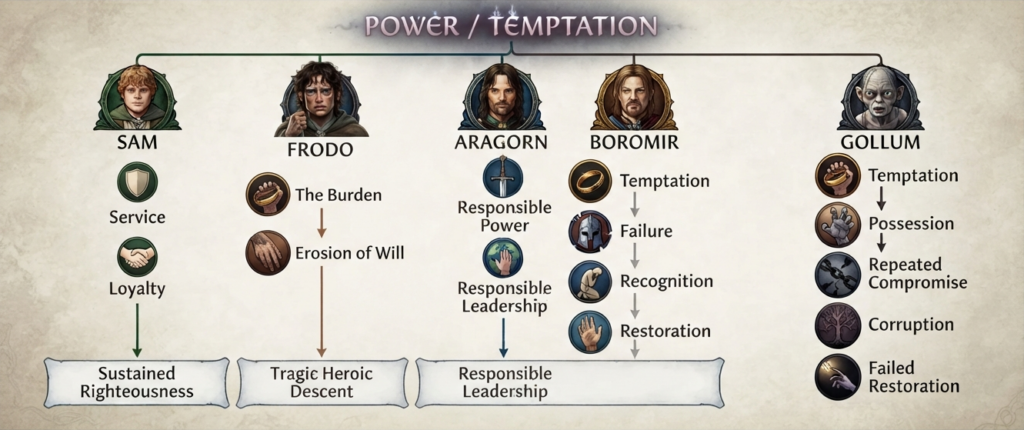
Figure 2. Five contrasting righteousness trajectories
Figure 2 illustrates righteousness as a trajectory rather than a permanent label. The five characters represent different relationships between values, power, temptation, failure, and restoration.
13. What Can Ordinary People Learn?
The purpose of an Righteous Advisory case study is not merely to analyze famous characters.
The question is:
What can an ordinary person apply to everyday life?
The answer begins with Sam.
Most people do not rule kingdoms.
Most people do not command armies.
Most people do not possess magical objects.
But people constantly make smaller choices involving:
- promises;
- friendships;
- family;
- work;
- money;
- responsibility;
- honesty;
- temptation;
- and trust.
Sam therefore provides a practical lesson:
Righteousness often begins with doing the next responsible thing when nobody is rewarding you for doing it.
A person can practice righteousness by:
- keeping commitments;
- helping someone who depends upon them;
- telling the truth when lying would be easier;
- accepting responsibility rather than shifting blame;
- resisting the temptation to exploit another person;
- admitting mistakes;
- repairing relationships;
- and contributing to restoration after harm.
Righteousness is therefore not restricted to dramatic moral decisions.
It is also expressed through ordinary repeated behavior.
14. What Can Leaders Learn?
Leadership is where the RI framework becomes particularly important.
A leader’s decisions affect other people.
Therefore leadership creates a greater responsibility to examine righteousness.
The four characters provide four leadership lessons.
14.1 Sam: Lead Through Service
Leadership does not always begin with authority.
It can begin with:
reliability + responsibility + service.
An employee can demonstrate leadership.
A parent can demonstrate leadership.
A teacher can demonstrate leadership.
A volunteer can demonstrate leadership.
A community member can demonstrate leadership.
Formal position is not the only source of influence.
14.2 Aragorn: Treat Power as Stewardship
When leaders receive authority, they should ask:
“Who benefits from the power I have been given?”
The RI perspective treats authority as a responsibility.
A leader should therefore consider:
- Who depends upon me?
- Who is vulnerable to my decisions?
- Am I using authority for personal advantage?
- Can people safely disagree with me?
- Do I accept responsibility for consequences?
- What will happen to the organization after I leave?
This transforms leadership from possession of authority into stewardship of authority.
14.3 Boromir: Good Intentions Need Ethical Controls
Boromir presents a warning that is especially relevant to modern organizations.
Leaders often justify questionable actions by appealing to a good purpose:
“I am doing this for the company.”
“I am doing this for my team.”
“I am doing this for the country.”
“I am doing this for the greater good.”
But a good purpose does not automatically make every method righteous.
RI therefore asks leaders to examine both:
Why am I doing this?
and
How am I doing it?
14.4 Gollum: Watch for Ethical Drift
Ethical failure may begin with a small compromise.
One exception becomes another.
Eventually the exception becomes normal.
This creates an important organizational warning:
Righteousness can deteriorate gradually before anyone recognizes the final result.
Leaders therefore need mechanisms for:
- accountability;
- transparency;
- feedback;
- correction;
- independent review;
- and restoration.
14.5 Frodo: Watch for the Cost of Endurance
Frodo is the one who carries the Ring. The burden is not a single act of courage, but a long, grinding endurance that wears down his strength, his hope, and at the end, even his will.
One does not simply endure a burden. One must carry it day by day, step by step.
Frodo accepts the task not because he is powerful, but because he is willing.
He does not know the way. He does not know if he will succeed.
He only knows that the Ring must be destroyed, and that someone must carry it.
This creates an important organizational warning:
Endurance is not passive. It is an active, costly, and unsustainable state without support. Those who carry the heaviest burdens must not be left to carry them alone.
Leaders therefore need mechanisms for:
- recognition of the cost of sustained responsibility;
- support systems for those under prolonged pressure;
- places where vulnerability can be safely acknowledged;
- intervention before breakdown occurs;
- rest, renewal, and recovery;
- companionship for those who walk alone.
15. Five Leadership Principles from the Case
Table 8. Practical Leadership Principles Derived from the RI Case Study
| Principle | Literary Example | Leadership Application |
|---|---|---|
| 1. Character precedes position | Sam | Leadership can begin through service |
| 2. Power increases responsibility | Aragorn | Authority should be treated as stewardship |
| 3. Good intentions do not justify every method | Boromir | Leaders must evaluate both ends and means |
| 4. Repeated choices shape culture | Gollum | Leaders must prevent ethical drift |
| 5. Restoration matters after failure | Boromir vs. Gollum | Organizations need mechanisms for correction and recovery |
Description: Table 8 translates the literary analysis into practical leadership principles for use in organizations, communities, families, and other settings.
16. Righteousness Is Not the Same as Success
One of the most important implications of the case study is the distinction between success and righteousness.
A person can be successful without being righteous.
A leader can be effective without being righteous.
An organization can be profitable without being righteous.
A person can win a conflict without using righteous means.
Therefore:
Success is an outcome; righteousness concerns the quality of the path taken toward that outcome.
This distinction is critical for RI.
Otherwise, the framework could accidentally reward people simply because they are powerful or successful.
17. Righteousness Is Not the Same as Good Intentions
Boromir illustrates this distinction.
Good intentions matter.
But intentions alone are insufficient.
A more complete model is:
Intent → Decision → Action → Consequence → Accountability
Each stage matters.
A person can begin with a legitimate purpose and still make an unjustified decision.
Therefore RI should not measure only what people say they intended to do.
It should examine what they actually did.
18. Righteousness Is Relational
Sam’s righteousness is visible through Frodo.
Aragorn’s righteousness is visible through his relationship to those he leads.
Boromir’s choices affect the Fellowship.
Gollum’s corruption affects everyone around him.
This suggests:
Righteousness is not purely internal. It has relational consequences.
A person may think:
“This is my private decision.”
But if the decision affects other people, righteousness becomes relational.
This principle has direct implications for RI-OE, RI-O, RI-OF, and RI-N.
19. Righteousness Is Dynamic
Another important conclusion is that righteousness should not necessarily be treated as a permanent personality label.
People can:
- grow;
- decline;
- fail;
- recognize failure;
- recover;
- or repeatedly compromise.
Therefore a longitudinal approach may eventually be necessary.
Instead of asking only:
“What is this person’s RI score?”
future RI research might also ask:
“What direction is this person’s righteousness moving?”
This introduces the concept of a righteousness trajectory.
For example:
Growth trajectory
Values → Responsible choices → Accountability → Restoration → Growth
versus:
Corruption trajectory
Desire → Compromise → Rationalization → Repetition → Corruption
This may become one of the most important areas for future RI research.
20. Restoration as a Distinctive RI Dimension
Many moral frameworks concentrate heavily on avoiding wrongdoing.
RI adds another question:
What happens after wrongdoing occurs?
This matters because no realistic system of human behavior can assume that people will never fail.
The more useful questions are:
- Does the person recognize the failure?
- Does the person accept responsibility?
- Does the person attempt to repair harm?
- Does the person change behavior?
- Does trust become possible again?
- Does the person help restore what was damaged?
Boromir provides a literary example of recognition and attempted restoration.
Gollum provides a contrasting example of continued deterioration.
This suggests:
Restoration may be a fundamental component of sustainable righteousness rather than merely a secondary response to failure.
21. Toward a General Theory of Righteousness
The ultimate purpose of this case study is not Tolkien.
It is theory development.
If the same seven dimensions repeatedly appear when researchers examine:
- literature;
- history;
- religious narratives;
- political leaders;
- organizations;
- social movements;
- communities;
- and contemporary institutions,
then the RI framework may have broader explanatory value.
The proposed research progression is:
Literary Cases
      ↓
Historical Cases
      ↓
Organizational Cases
      ↓
Real-World Behavioral Cases
      ↓
Cross-Case Coding
      ↓
Recurring Dimensions
      ↓
RI Theory
      ↓
Measurement Development
      ↓
Validation
The Lord of the Rings is therefore not the proof of RI.
It is a theory-development case.
22. Proposed RI Theory Propositions
The case study generates several propositions for future research.
Proposition 1
Righteousness is multidimensional rather than reducible to a single moral trait.
Proposition 2
Righteousness becomes more observable when individuals face responsibility, temptation, uncertainty, or power.
Proposition 3
Good intentions alone do not guarantee righteous conduct.
Proposition 4
The responsible use of power is a major component of righteousness.
Proposition 5
Righteousness has relational consequences because individual choices affect the welfare and trust of others.
Proposition 6
Repeated behavioral patterns provide stronger evidence of character than isolated actions.
Proposition 7
Restoration after failure may be a fundamental component of sustained righteousness.
Proposition 8
Righteousness should be distinguished from power, popularity, effectiveness, and success.
Proposition 9
Righteousness can be studied as a trajectory rather than only as a static condition.
These propositions require further empirical testing.
They should therefore be treated as research propositions, not established scientific conclusions.
23. From Literary Interpretation to Measurement
This distinction is critical.
A literary interpretation might say:
“Sam is righteous.”
An RI research project should ask:
What observable behaviors support that conclusion?
The process should therefore be:
Narrative evidence
↓
Observable behavior
↓
Behavioral indicator
↓
RI dimension
↓
Coding rule
↓
Inter-rater testing
↓
Scoring methodology
↓
Validation
Only after such work should numerical scoring be introduced.
For example, instead of simply giving Sam a high “Assurance” score, a future instrument could define indicators such as:
- consistently fulfills legitimate commitments;
- protects people who depend upon him;
- accepts additional responsibility when necessary;
- maintains reliability under pressure;
- avoids exploiting another person’s vulnerability.
Those indicators could then be tested independently.
This would move RI from interpretive commentary toward a potentially measurable construct.
24. Why This Case Matters to Righteous Advisory
Righteous Advisory is ultimately concerned with a larger question:
Can righteousness become something that people can understand, discuss, evaluate, and improve?
A framework becomes useful when it can move between levels.
Individual
How should I behave?
Relationship
Can other people trust me?
Leadership
How should I use authority?
Organization
What kind of culture do our systems produce?
Society
What happens when power and responsibility become disconnected?
The Lord of the Rings provides examples at several of these levels.
That is why it belongs in an RI Case Studies library.
25. A Practical RI Reflection for Readers
After reading the case study, a person can ask seven questions about his or her own life:
Fundamentals
What values fundamentally guide my decisions?
Foundation
Are those values stable when I am under pressure?
Alignment
Do my actions actually match what I claim to value?
Structure
How do I use whatever power or authority I possess?
Process
How do I make decisions when I am afraid, angry, tired, or tempted?
Assurance
Can other people genuinely depend on me?
Restoration
What do I do when I fail?
These questions transform the RI framework from something used only to analyze famous characters into a framework for personal reflection.
26. A Practical RI Reflection for Leaders
Leaders can ask an additional set of questions:
- Who is affected by my decisions?
- Who is vulnerable to my authority?
- Do I use power primarily for stewardship or personal benefit?
- Can people safely challenge my decisions?
- Do my stated values match organizational behavior?
- What happens when someone makes a mistake?
- Does our organization punish honest correction or encourage restoration?
- Are small ethical compromises becoming normalized?
- What happens to the organization after I leave?
- Would people describe my leadership as trustworthy even when I am not present?
These questions can eventually become the foundation for more formal RI leadership assessment.
27. Limitations of This Case Study
This analysis has several important limitations.
First, the characters are fictional.
They cannot provide empirical evidence about actual human behavior.
Second, literary interpretation is inherently interpretive.
Different readers can reasonably interpret particular events differently.
Third, this article does not validate RI statistically.
No reliability coefficient, predictive validity test, factor analysis, or independent scoring study is presented here.
Fourth, the analysis is selective.
Only four characters are examined in depth.
Fifth, the RI framework is imposed analytically.
Tolkien did not formulate the seven RI dimensions presented in this article.
Therefore the proper claim is:
RI can be applied to Tolkien’s characters as a case-study framework.
The improper claim would be:
Tolkien created the RI framework.
This distinction is essential for scholarly integrity.
28. Copyright and Intellectual Property Note
This article is an independent critical and analytical case study of The Lord of the Rings. It does not reproduce Tolkien’s narrative, illustrations, maps, or other expressive material.
The title The Lord of the Rings is used to identify the work being analyzed. The U.S. Copyright Office explains that copyright does not protect titles, names, or short phrases. (U.S. Copyright Office)
U.S. copyright law also recognizes criticism, commentary, scholarship, teaching, and research among the purposes that may qualify for fair use, although fair use is determined from the circumstances of each particular use rather than by a fixed number of words or a simple percentage rule. (U.S. Copyright Office)
Accordingly, this case study should rely primarily on original analysis and limited, properly attributed references, rather than reproducing Tolkien’s expressive text.
This article does not claim affiliation with or endorsement by J. R. R. Tolkien, his estate, or the rights holders of The Lord of the Rings.
29. Conclusion: From Middle-earth to Everyday Life
The Lord of the Rings is a story about an extraordinary world.
But its deepest questions are familiar.
What do we do when we have power?
What do we do when we are afraid?
What do we do when our intentions are good but our methods become questionable?
Can people trust us?
What happens when we fail?
And perhaps most importantly:
What do we do after we fail?
Sam demonstrates that righteousness does not require formal authority.
Aragorn demonstrates that authority should increase responsibility.
Boromir demonstrates that good intentions do not protect a person from temptation and that failure requires recognition.
Gollum demonstrates how repeated compromise can gradually reshape a person’s trajectory.
Together, they suggest that righteousness is not adequately described by the simple categories of “good person” and “bad person.”
A more useful approach examines:
Fundamentals.
Foundation.
Alignment.
Structure.
Process.
Assurance.
Restoration.
These dimensions provide a way to move from story to reflection, from reflection to leadership, and from leadership to theory.
The ultimate purpose of the Righteousness Index is not to give people another label.
It is to help us ask better questions about human behavior.
A high position does not necessarily indicate righteousness.
A successful outcome does not necessarily indicate righteousness.
Good intentions do not necessarily indicate righteousness.
Likewise, a failure does not necessarily mean that restoration is impossible.
The more important question is the pattern:
What values guide a person, how are those values translated into decisions, how is power handled, how do those decisions affect others, and what happens when the person fails?
That is why The Lord of the Rings is valuable as an RI case study.
The story gives us characters.
RI gives us questions.
And the combination gives us a possible path toward a broader theory of righteousness.
The ultimate objective is not merely to understand Sam, Aragorn, Boromir, or Gollum.
It is to become better at understanding ourselves, our leaders, our organizations, and our societies.
References
Auden, W. H. (1967). Good and evil in The Lord of the Rings. Tolkien Journal, 3(1).
Carpenter, H. (1977). J. R. R. Tolkien: A Biography. George Allen & Unwin.
Levitin, A. (1970). Power in The Lord of the Rings. Tolkien Journal, 4(3).
Reinken, D. L. (1966). The Lord of the Rings: A Christian refounding of the political order. Tolkien Journal, 2(3).
Shippey, T. A. (2001). J. R. R. Tolkien: Author of the Century. Houghton Mifflin.
Snyder, C. A. (2020). Hobbit Virtues: Rediscovering Virtue Ethics through J. R. R. Tolkien’s The Hobbit and The Lord of the Rings. Pegasus Books.
Tolkien, J. R. R. (1954). The Fellowship of the Ring. George Allen & Unwin.
Tolkien, J. R. R. (1954). The Two Towers. George Allen & Unwin.
Tolkien, J. R. R. (1955). The Return of the King. George Allen & Unwin.
Tolkien, J. R. R. (1981). The Letters of J. R. R. Tolkien. Edited by Humphrey Carpenter with Christopher Tolkien. George Allen & Unwin.
Righteous Advisory Case Study Classification
Case Study Category: Literature & Character
Primary Framework: Righteousness Index (RI)
Primary Dimensions: Fundamentals, Foundation, Alignment, Structure, Process, Assurance, Restoration
Primary Applications: Individual Character, Personal Development, Leadership, Power, Organizational Ethics, Theory Development
Case Study Subjects: Samwise Gamgee, Aragorn, Boromir, Gollum
Research Status: Conceptual / Theory Development
RI Validation Status: This case study demonstrates application of the RI framework; it does not by itself constitute empirical validation of RI.