A Practical Guide to Empowering People Through Righteousness
How the Five Clusters of Righteous Motivation Translate Values into Actionable Growth for Individuals and Organizations
Abstract
The Righteous Motivation Framework (RMF) is a practical, five-cluster model designed to translate the abstract concept of righteousness into actionable growth for individuals and organizations. Drawing on the foundational Righteous Standards System (RSS), RMF provides a structured approach to understanding and cultivating the internal and external factors that drive righteous behavior. This article introduces the five clusters—Inner Core, Relational, Meaning & Achievement, Ethical Foundation, and Resilience & Growth—and explores how they can be applied across diverse contexts, including business, government, education, and sports. When righteousness becomes the framework for motivation, individuals and organizations no longer see a trade-off between “doing right” and “succeeding”—they discover that righteousness is the most reliable path to lasting impact.
Chapter 1: Introduction — The Missing Link in Human Motivation
Every leader has faced the same frustrating question: “Why do the people I lead seem unmotivated, even when I offer rewards, recognition, and incentives?”
The answer is surprisingly simple: External rewards alone cannot inspire lasting commitment. They can buy compliance, but they cannot buy passion. They can drive short-term performance, but they cannot sustain long-term engagement (Pink, 2009).
What is missing is righteousness — the alignment of values, actions, and purpose (Collins & Porras, 1996). When individuals feel that their work is meaningful, that they are treated fairly, and that they can trust their leaders, they become motivated from within. This is not a soft, feel-good concept. It is a strategic advantage that drives sustainable success.
This article introduces the Righteous Motivation Framework (RMF) — a practical, five-cluster model that translates the abstract concept of righteousness into actionable growth for individuals and organizations. RMF is built upon the foundational Righteous Standards System (RSS) , a seven-layer standard that defines what righteousness looks like in practice.
Whether you are a business leader, a government official, an educator, a coach, or simply someone who wants to grow in integrity and purpose, this framework is for you.
Chapter 2: What Is the Righteous Motivation Framework (RMF)?
The Righteous Motivation Framework (RMF) is a practical tool designed to help individuals and organizations understand and cultivate the factors that drive righteous behavior. It organizes the complex, multi-dimensional nature of motivation into five clusters that are easy to understand and apply.
This block diagram presents the five clusters of RMF as interconnected blocks showing the flow from Inner Core through to Resilience & Growth.
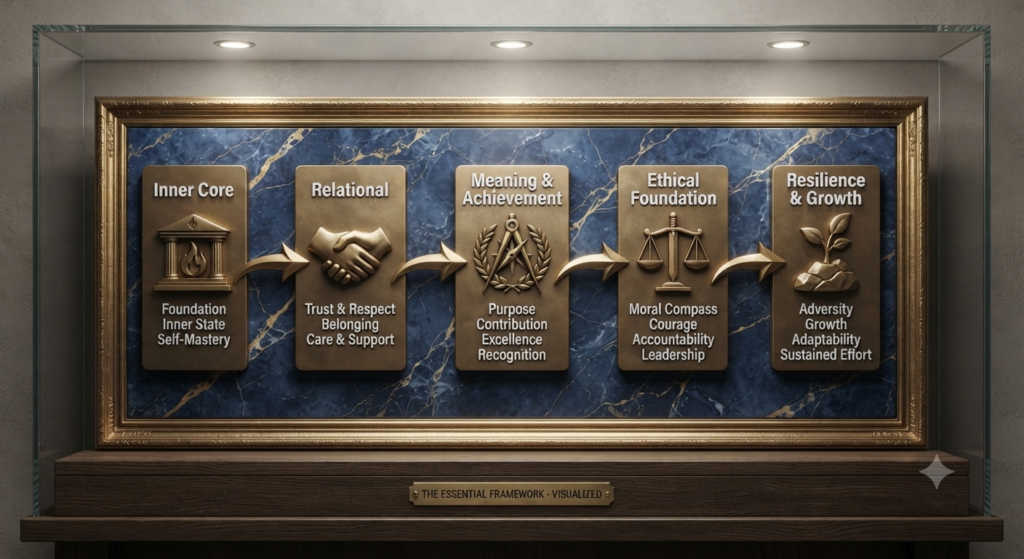
Figure 1: The Righteous Motivation Framework — Five Clusters (Block Format)
This table 1 provides a high-level overview of all five clusters with their core themes and key messages.
Table 1: The Five Clusters of Righteous Motivation — Overview
| Cluster | Core Theme | Key Message |
|---|---|---|
| 1. Inner Core | Who you are as a person | Righteousness begins within |
| 2. Relational | Who you serve or work alongside | Righteousness is built through trust and connection |
| 3. Meaning & Achievement | What you aim for | Righteousness gives purpose to daily actions |
| 4. Ethical Foundation | What you stand for | Righteousness requires courage and accountability |
| 5. Resilience & Growth | How you endure and evolve | Righteousness grows through challenges |
These five clusters provide a practical, accessible framework for understanding and cultivating righteous motivation in any context—whether in a corporation, a government agency, a school, a sports team, or a non-profit organization.
Chapter 3: Cluster 1 — Inner Core: The Foundation of Character
The Inner Core is the foundation of all righteous motivation. It represents who you are at your deepest level—your values, your conscience, your sense of self. When the Inner Core is strong, individuals are not easily swayed by pressure or temptation (Dweck, 2006).
This table 2 presents the Inner Core factors organized into 3 sub-clusters: Foundation, Inner State, and Self-Mastery.
Table 2: Inner Core Factors
| Sub-Cluster | Factor | What It Means |
|---|---|---|
| Foundation | ROCK | Staying true to your values under pressure |
| Foundation | GROUNDEDNESS | Stability and rootedness in principles |
| Foundation | INTEGRITY | Consistency between words and actions |
| Foundation | DIGNITY | Knowing your inherent worth |
| Inner State | PEACE | Inner calm from a clear conscience |
| Inner State | CONFIDENCE | Certainty of being on the right path |
| Inner State | NO FEAR | Courage to face consequences |
| Inner State | CLEAR CONSCIENCE | Being answerable to oneself |
| Self-Mastery | TEMPERANCE | Self-restraint against greed |
| Self-Mastery | CONTENTMENT | Satisfaction with what is sufficient |
| Self-Mastery | AUTHENTICITY | Being true to who you are |
Key Insight: The Inner Core is the anchor. When it is strong, everything else becomes possible. When it is weak, the other clusters cannot function effectively.
Reflection Question: Do you stay true to your values when no one is watching?
Chapter 4: Cluster 2 — Relational: The Power of Connection
No one grows in righteousness alone. The Relational cluster recognizes that we are fundamentally social beings—our behavior is profoundly shaped by those we trust, respect, and care about (Grant, 2013).
This table 3 presents the Relational factors organized into 3 sub-clusters: Trust & Respect, Belonging, and Care & Support.
Table 3: Relational Factors
| Sub-Cluster | Factor | What It Means |
|---|---|---|
| Trust & Respect | TRUST BY OTHERS | Being relied upon by others |
| Trust & Respect | RESPECT | Being genuinely esteemed by others |
| Trust & Respect | HONOR | Self-respect and respect from others |
| Belonging | BELONGING | Being part of a meaningful group |
| Belonging | LOYALTY | Mutual faithfulness in relationships |
| Belonging | COMPANIONSHIP | Walking alongside like-minded peers |
| Belonging | UNITY | Standing together with others |
| Care & Support | LOVE | Genuine care for others |
| Care & Support | EMPATHY | Understanding others’ situations |
| Care & Support | SOLIDARITY | Sharing joy and hardship with others |
| Care & Support | AFFIRMATION | Being recognized and encouraged by others |
Key Insight: Righteousness is built together. Trust is the currency that makes righteous action possible, and trust is built through consistent, caring relationships.
Reflection Question: Do you build trust with those you lead and serve?
Chapter 5: Cluster 3 — Meaning & Achievement: Purpose in Action
People need to know that their work matters. The Meaning & Achievement cluster addresses the deep human need for purpose, contribution, and the satisfaction of doing something worthwhile (Frankl, 1959).
This table 4 presents the Meaning & Achievement factors organized into 4 sub-clusters: Purpose, Contribution, Excellence, and Recognition.
Table 4: Meaning & Achievement Factors
| Sub-Cluster | Factor | What It Means |
|---|---|---|
| Purpose | MEANING | Deeper value in one’s work |
| Purpose | PURPOSE | Knowing why you do what you do |
| Purpose | VISION | Seeing a better future |
| Purpose | HOPE | Positive expectation for the future |
| Contribution | CONTRIBUTION | Positive impact on others |
| Contribution | SERVICE | Contributing to others |
| Contribution | LEGACY | Leaving something worth remembering |
| Excellence | EXCELLENCE | Pursuit of the highest standard |
| Excellence | ACHIEVEMENT | Accomplishing something praiseworthy |
| Excellence | PROGRESS | Seeing growth in self and others |
| Recognition | PROUD | Justifiable pride in one’s actions |
| Recognition | REPUTATION | A good name built over time |
| Recognition | INFLUENCE | Positively shaping others |
| Recognition | INSPIRATION | Inspiring others to goodness |
Key Insight: When people see their work as meaningful, they transcend self-interest. Purpose is the engine of sustainable motivation.
Reflection Question: Does your work give you a sense of purpose and pride?
Chapter 6: Cluster 4 — Ethical Foundation: The Courage to Stand Firm
Righteousness is not always easy. It requires courage, honesty, and accountability—especially when facing pressure, opposition, or temptation (Collins & Porras, 1996).
This table 5 presents the Ethical Foundation factors organized into 4 sub-clusters: Moral Compass, Courage, Accountability, and Leadership.
Table 5: Ethical Foundation Factors
| Sub-Cluster | Factor | What It Means |
|---|---|---|
| Moral Compass | JUSTICE | Fair treatment for all |
| Moral Compass | HONESTY | Truthfulness with self and others |
| Moral Compass | TRUTH | Commitment to reality over deception |
| Moral Compass | CONSCIENCE | Listening to the inner voice |
| Courage | COURAGE | Doing right even when it is difficult |
| Courage | MORAL COURAGE | Paying the price to do what is right |
| Courage | NO FEAR | Courage to face consequences |
| Accountability | RESPONSIBILITY | Taking ownership of one’s actions |
| Accountability | ACCOUNTABILITY | Willingness to face consequences |
| Accountability | TRANSPARENCY | Openness rather than concealment |
| Leadership | BELIEF | Faith in the power of righteousness |
| Leadership | ROLE MODEL | Being an example for others |
| Leadership | INTEGRITY | Consistency between words and actions |
Key Insight: The Ethical Foundation is the firewall that protects righteousness when pressure mounts. It is the difference between standing firm and folding under pressure.
Reflection Question: Do you have the courage to do what is right, even when it costs you?
Chapter 7: Cluster 5 — Resilience & Growth: Thriving Through Challenge
Righteousness is not a destination—it is a journey. The Resilience & Growth cluster addresses how individuals and organizations can grow stronger through challenges, setbacks, and adversity (Dweck, 2006).
This table 6 presents the Resilience & Growth factors organized into 4 sub-clusters: Adversity, Growth, Adaptability, and Sustained Effort.
Table 6: Resilience & Growth Factors
| Sub-Cluster | Factor | What It Means |
|---|---|---|
| Adversity | RESILIENCE | Bouncing back from setbacks |
| Adversity | HOPE | Expecting a better future |
| Adversity | DETERMINATION | Resolve to continue despite difficulty |
| Growth | PROGRESS | Seeing growth in self and others |
| Growth | EXCELLENCE | Pursuit of the highest standard |
| Growth | MASTERY | Deep competence and skill |
| Adaptability | FLEXIBILITY | Adjusting while staying true to values |
| Adaptability | LEARNING | Continuous acquisition of wisdom |
| Adaptability | PATIENCE | Enduring through delays |
| Sustained Effort | PERSEVERANCE | Steady persistence |
| Sustained Effort | DEDICATION | Commitment to a righteous path |
| Sustained Effort | ENDURANCE | Strength to continue despite exhaustion |
Key Insight: Challenges are not obstacles to righteousness—they are opportunities to grow in righteousness. Resilience and growth are inseparable from the righteous journey.
Reflection Question: Do you give up when things get hard, or do you persevere?
Chapter 8: Introducing RSS — The Foundational Standard
Before exploring how RMF connects to a broader framework, it is essential to understand the Righteous Standards System (RSS) . RSS is the foundational standard upon which RMF is built.
What Is RSS?
RSS is a comprehensive, ISO-aligned standard for operationalizing righteousness across individuals and institutions. It is built on seven interdependent layers, each building upon the one below it, creating a complete system for righteousness governance.
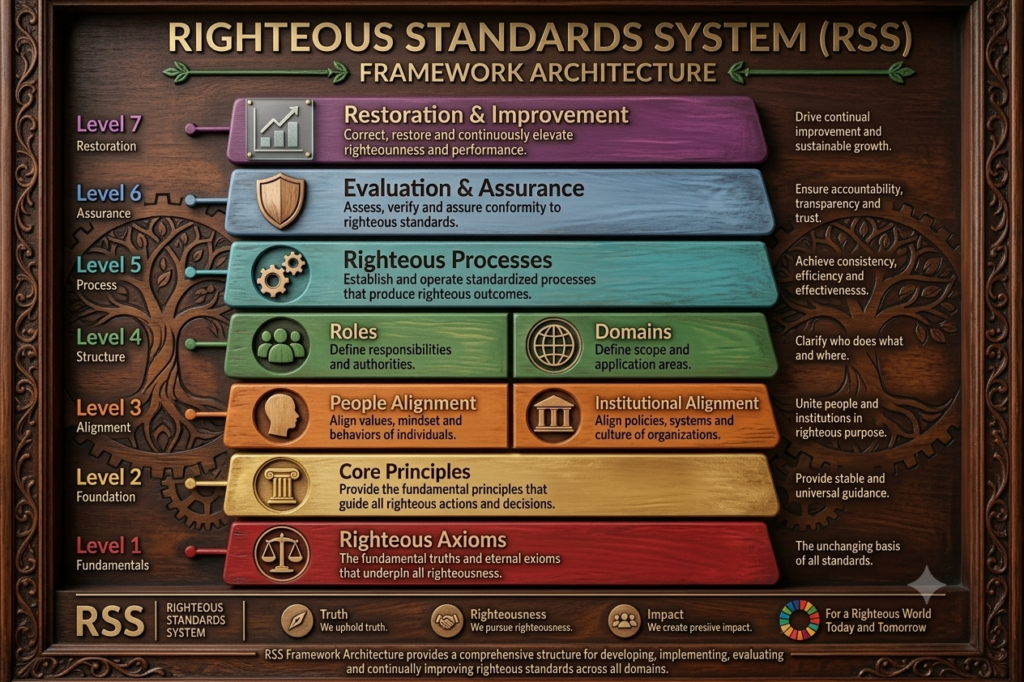
Figure 2: The RSS Seven-Layer Standard
This pyramid diagram presents the seven layers of the Righteous Standards System (RSS) from Fundamentals at the bottom to Restoration at the top.
This table 7 provides a brief introduction to the seven RSS layers with their definitions and key questions.
Table 7: RSS Seven Layers — Overview
| Layer | Name | Definition | Key Question |
|---|---|---|---|
| 1 | Fundamentals | Universal, non-negotiable principles | What will we never compromise? |
| 2 | Foundation | Core values that guide action | What do we believe? |
| 3 | Alignment | Unifying people in righteous purpose | Are our actions aligned with our values? |
| 4 | Structure | Clear roles and responsibilities | Who is responsible for what? |
| 5 | Process | Standardized procedures for righteous outcomes | How do we ensure righteousness daily? |
| 6 | Assurance | Evaluation and verification of righteousness | How do we know we are succeeding? |
| 7 | Restoration | Correction and recovery when righteousness is broken | How do we learn and become stronger? |
RSS provides the “what” —the comprehensive definition of righteousness. RMF provides the “how” —the practical application of RSS to motivation and growth.
Chapter 9: How RMF Maps to RSS
RMF is not separate from RSS—it is a practical application of the RSS standard to the domain of motivation and growth. The five clusters of RMF map directly to specific RSS layers, demonstrating that righteous motivation is grounded in a comprehensive standard.
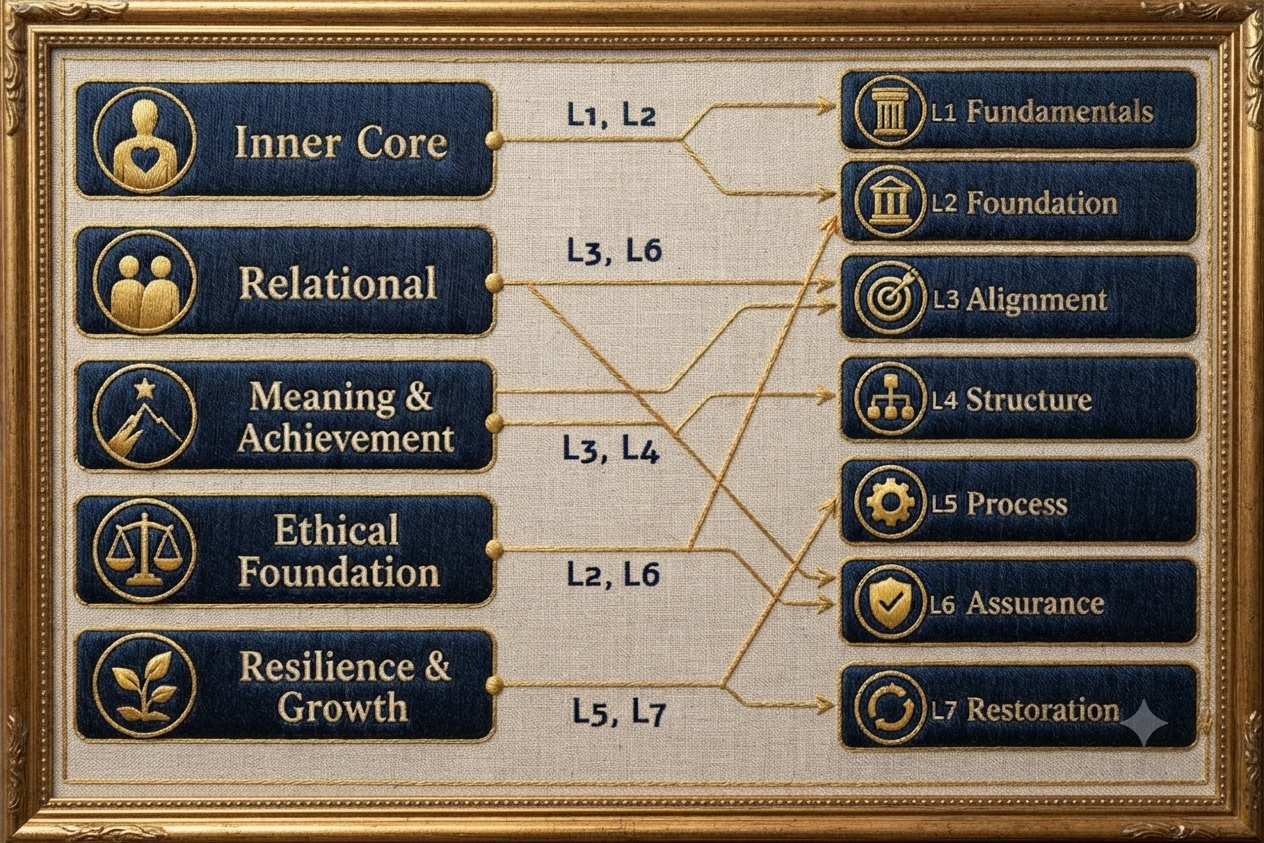
Figure 3: Mapping RMF Clusters to RSS Layers
This diagram illustrates the relationship between the five RMF clusters (left) and the seven RSS layers (right). Connecting lines show how each cluster maps to specific RSS layers. Note: RSS Layer 1 (Fundamentals) appears at the top of this diagram to align with the required sequence illustration, whereas in Figure 2 it appears at the bottom of the pyramid.
For the table 8 , it provides a detailed mapping of each RMF cluster to specific RSS layers with explanations of the relationship.
Table 8: Mapping RMF Clusters to RSS Seven Layers
| RMF Cluster | Maps To (RSS Layers) | Why This Connection Matters |
|---|---|---|
| Inner Core | Fundamentals, Foundation | Inner values align with universal principles and core beliefs |
| Relational | Alignment, Assurance | Trust and connection align people with values and provide verification of trust |
| Meaning & Achievement | Alignment, Structure | Purpose aligns work with values; clear roles enable achievement |
| Ethical Foundation | Foundation, Assurance | Moral courage is grounded in core values and verified through action |
| Resilience & Growth | Process, Restoration | Growth requires standardized processes and the ability to recover from setbacks |
Key Insight: When leaders and employees understand this mapping, they see that RMF is not a separate initiative—it is a natural application of the organization’s foundational RSS standard.
Chapter 10: How to Apply RMF in Your Context
The RMF framework is designed to be practical and actionable. Here is how leaders, educators, coaches, and public servants can apply it in their specific contexts.
This table 9 provides practical actions for leaders, educators, coaches, and public servants organized by cluster.
Table 9: Application Guide — How to Use RMF in Your Context
| Cluster | Business/Corporate | Government/Public | Education/Academy | Sports/Performance |
|---|---|---|---|---|
| Inner Core | Hire for character | Recruit public servants with integrity | Hire educators with strong values | Select athletes with character |
| Relational | Build trust with teams | Build trust with citizens | Build trust with parents and students | Build trust among teammates |
| Meaning & Achievement | Connect work to purpose | Connect policy to citizen well-being | Connect learning to student growth | Connect training to team purpose |
| Ethical Foundation | Model ethical behavior | Model transparency and accountability | Model integrity for students | Model sportsmanship and respect |
| Resilience & Growth | Support employees through challenges | Support citizens through crises | Support students through difficulties | Support athletes through losses and setbacks |
Table 10: Step-by-Step Application Guide
| Step | Action | Description |
|---|---|---|
| 1 | Assess | Evaluate where your organization or team stands on each of the five clusters using RMF as a diagnostic tool |
| 2 | Prioritize | Identify which cluster needs the most attention based on your assessment |
| 3 | Plan | Develop specific actions to strengthen that cluster using the factors listed in Tables 2–6 |
| 4 | Implement | Put the plan into action—start small and build momentum |
| 5 | Measure | Use the Righteous Growth Score (RGS) or similar tools to track progress over time |
| 6 | Iterate | Adjust your approach based on feedback and results—continuous improvement is key |
Chapter 11: Real-World Impact — Case Studies
The RMF framework is not theoretical—it is grounded in real-world practice. Here are four case studies from different sectors that demonstrate the principles of righteous motivation in action.
Case Study 1: Business — Patagonia’s Ethical Supply Chain
Patagonia, the outdoor clothing company, has built its brand on environmental responsibility and ethical supply chains. Founder Yvon Chouinard (2016) embedded righteousness into the company’s DNA from the beginning—refusing to compromise on environmental values even when it meant higher costs or slower growth.
RMF Connection:
- Meaning & Achievement: Employees find deep purpose in protecting the environment
- Ethical Foundation: The company takes a stand on environmental issues
- Inner Core: The company’s values are non-negotiable
Result: Patagonia has built a loyal customer base and sustained profitability while maintaining its ethical standards for over 50 years.
Case Study 2: Government — New Zealand’s Wellbeing Budget
In 2019, New Zealand introduced the world’s first “Wellbeing Budget”—a government framework that prioritizes citizen well-being over GDP growth. The approach measures success not just by economic output but by social, environmental, and cultural indicators (New Zealand Treasury, 2023).
RMF Connection:
- Meaning & Achievement: Policy is connected to human well-being
- Relational: Trust between citizens and government is a priority
- Assurance (RSS): Well-being indicators provide verification of success
Result: New Zealand has been ranked as one of the least corrupt and most transparent governments in the world.
Case Study 3: Education — Finland’s Trust-Based Education System
Finland’s education system is renowned for its equity, high student achievement, and trust in teachers. Rather than relying on standardized testing and external accountability, Finland focuses on teacher professionalism, student well-being, and equitable access to education (Sahlberg, 2011).
RMF Connection:
- Relational: Trust between teachers, students, and parents is foundational
- Inner Core: Teachers are selected for their character and commitment
- Ethical Foundation: Equity and fairness are non-negotiable principles
Result: Finland consistently ranks among the top education systems in the world with high student satisfaction and achievement.
Case Study 4: Sports — The New Zealand All Blacks’ Culture of Humility
The New Zealand All Blacks rugby team is one of the most successful sports teams in history. Their success is attributed not just to talent but to a culture of humility and service known as “Sweep the Sheds”—a practice where even the star players clean up after themselves (Kerr, 2013).
RMF Connection:
- Resilience & Growth: Continuous improvement and learning from failure
- Relational: Strong bonds and trust among teammates
- Ethical Foundation: No one is above the team
Result: The All Blacks have maintained a win rate of over 70% for decades, built on a foundation of character, humility, and team cohesion.
Chapter 12: Conclusion — RMF as Your Compass for Righteous Growth
The Righteous Motivation Framework is more than a set of concepts—it is a practical compass for individuals and organizations seeking to align their actions with their values.
Table 11: Key Takeaways
| Lesson | Implication |
|---|---|
| Righteousness is the foundation | Without it, motivation is fragile and unsustainable |
| The five clusters are interconnected | Each cluster builds upon and strengthens the others |
| RMF is grounded in RSS | RMF is a practical application of the RSS standard |
| RMF works across contexts | It applies to business, government, education, sports, and non-profits |
| Righteous growth is a journey | There is no endpoint—only continuous growth and refinement |
The Bigger Picture
When righteousness becomes the framework for motivation, individuals and organizations no longer see a trade-off between “doing right” and “succeeding.” They discover that righteousness is the most reliable path to lasting impact.
“Righteousness builds reputation on rock. Reputation builds trust. Trust builds success.”
Invitation
If you are interested in applying the RMF framework to your organization, Righteous Advisory can help you:
- Assess your organization’s standing on the five clusters
- Develop a customized plan for strengthening righteous motivation
- Train leaders and teams in the RMF framework
- Measure progress over time
When righteousness becomes your operating system, success is no longer a goal to be pursued—it becomes a natural outcome.
References
Albert, S., & Whetten, D. A. (1985). Organizational identity. Research in Organizational Behavior, 7, 263–295.
Chouinard, Y. (2016). Let my people go surfing: The education of a reluctant businessman. Penguin Books.
Collins, J. C., & Porras, J. I. (1996). Built to last: Successful habits of visionary companies. Harper Business.
Dweck, C. S. (2006). Mindset: The new psychology of success. Random House.
Frankl, V. E. (1959). Man’s search for meaning. Beacon Press.
Grant, A. M. (2013). Give and take: Why helping others drives our success. Penguin Books.
Kerr, J. (2013). Legacy: What the All Blacks can teach us about the business of life. Constable.
New Zealand Treasury. (2023). The wellbeing budget 2023. New Zealand Government.
Pink, D. H. (2009). Drive: The surprising truth about what motivates us. Riverhead Books.
Righteous Advisory. (2026). RSS Standard Catalog. https://advisory.wiserighteous.org/standard-catalog/
Sahlberg, P. (2011). Finnish lessons: What can the world learn from educational change in Finland? Teachers College Press.