
Why Doing the Righteous Thing is the Best Career Decision You Can Make
Abstract
This article presents a practical framework for employees who want to build meaningful careers based on integrity, trust, and purpose. Drawing on established research in organizational behavior, positive psychology, and real-world case studies from Toyota and Costco, we argue that righteousness—the alignment of values, actions, and relationships—is not only a moral choice but a strategic career decision. Employees who prioritize righteousness build lasting reputations, earn the trust of colleagues and leaders, and create careers that endure through challenges. This guide provides practical steps for employees to grow in righteousness, one decision at a time.
1. Introduction: A Choice You Face Every Day
Every day at work, you face a choice (Dweck, 2006).
- When no one is watching, do you take the shortcut or do the job right?
- When a colleague asks you to cover up a mistake, do you stay silent or speak up?
- When a client pushes for a deal that feels wrong, do you say yes or walk away?
These are not just moral questions. They are career questions. They are life questions (Frankl, 1959).
The answer to each of these questions shapes who you become. It shapes how others see you. It shapes the opportunities that come your way (Grant, 2013).
This guide is for you.
It is not about being “perfect.” It is about understanding why doing the right thing is actually the smartest thing you can do for your career, your relationships, and your peace of mind.
2. What Is Righteousness, Really?
Righteousness is not about being self-righteous or judgmental. It is about (Albert & Whetten, 1985):
- Being true to your values, even when it is hard
- Treating others with fairness and respect
- Taking responsibility for your actions
- Having the courage to stand up for what is right
Righteousness is not weakness. It is strength (Pink, 2009). It is the quiet confidence that comes from knowing you are doing the right thing—even if no one else sees it.
3. The Five Clusters of Righteous Motivation
Think of righteousness as a tree with five branches. Each branch represents a different source of motivation that helps you stay true to yourself and succeed in your career.
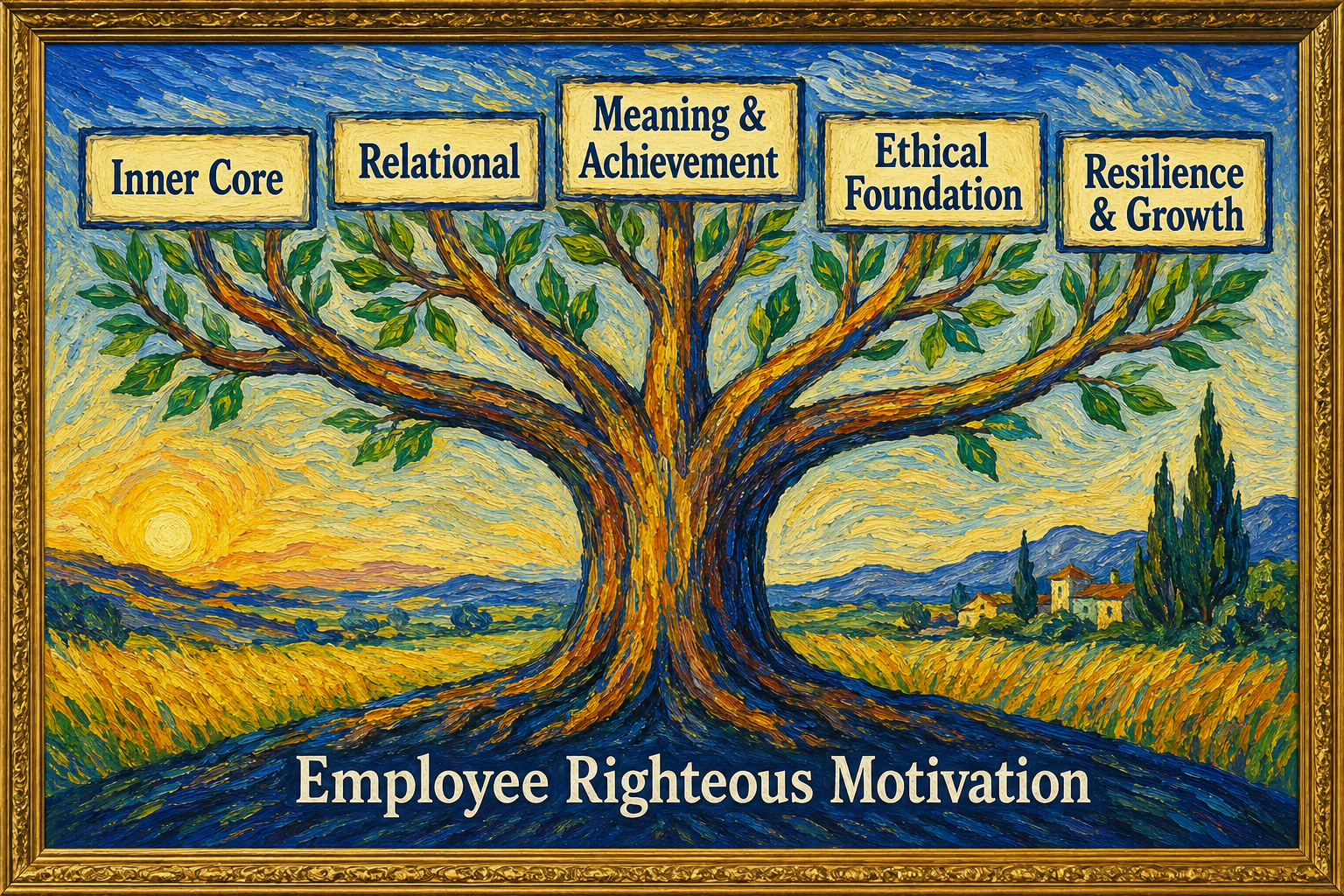
Figure 1: The Righteous Motivation Tree — 5 Clusters for Employee Growth
This diagram presents the 5 clusters of motivational factors in a tree structure. Each of the 5 main branches represents a source of motivation for employees: Inner Core, Relational, Meaning & Achievement, Ethical Foundation, and Resilience & Growth. The tree metaphor emphasizes how employee motivation grows organically when the right internal and external conditions are in place.
4. Cluster 1: Your Inner Core — Who You Are Matters
This is the foundation. Your values, your conscience, your sense of self. When your Inner Core is strong, you are not easily swayed by pressure or temptation (Dweck, 2006).
This table 1 presents the Inner Core factors organized into 3 sub-clusters: Foundation, Inner State, and Self-Mastery. Each factor is defined with a rationale explaining how it helps employees grow in righteousness.
Table 1: Inner Core Factors
| Sub-Cluster | Factor | What It Means | Why It Matters to You |
|---|---|---|---|
| Foundation | ROCK | Staying true to your values | When you know what you stand for, no one can pressure you into doing wrong |
| Foundation | GROUNDEDNESS | Stability and rootedness | Pursuing profit is like walking a tightrope; righteousness is like standing on solid rock |
| Foundation | INTEGRITY | Being the same person everywhere | Your reputation follows you — protect it |
| Foundation | DIGNITY | Knowing your worth | Money can buy things, but it cannot buy your self-respect |
| Inner State | PEACE | Inner calm from a clear conscience | You sleep better at night when you have nothing to hide |
| Inner State | CONFIDENCE | Knowing you are on the right path | You walk taller when you know you have done the right thing |
| Inner State | NO FEAR | Courage to face consequences | When you do right, you have nothing to fear |
| Inner State | CLEAR CONSCIENCE | Being answerable to yourself | You can live with yourself when you act with integrity |
| Self-Mastery | TEMPERANCE | Self-restraint against greed | Only those who can say “enough” are truly free |
| Self-Mastery | CONTENTMENT | Satisfaction with what is sufficient | The pursuit of profit is never-ending; righteousness brings fulfillment in what is truly valuable |
| Self-Mastery | AUTHENTICITY | Being true to who you are | Pretending to be someone else is exhausting — be yourself |
Question for You: Do you stay true to your values, or do you bend them when it is convenient?
5. Cluster 2: Your Relationships — You Are Not Alone
We all need people we can trust. Our relationships at work shape our experience, our growth, and our success. Righteousness builds strong relationships (Grant, 2013).
This table 2 presents the Relational factors organized into 3 sub-clusters: Trust & Respect, Belonging, and Care & Support. Each factor is defined with a rationale explaining how it strengthens employee relationships and career growth.
Table 2: Relational Factors
| Sub-Cluster | Factor | What It Means | Why It Matters to You |
|---|---|---|---|
| Trust & Respect | TRUST BY OTHERS | People rely on you | Trust is the most valuable currency in your career |
| Trust & Respect | RESPECT | People genuinely respect you | Respect is earned through consistency, not bought with favors |
| Trust & Respect | HONOR | Self-respect and respect from others | Honor provides a more lasting satisfaction than quarterly bonuses |
| Belonging | BELONGING | You are part of a meaningful team | Teams united by purpose endure longer than teams united by profit |
| Belonging | LOYALTY | Mutual faithfulness | When you are loyal, others are loyal to you |
| Belonging | COMPANIONSHIP | You are not alone | On the path of righteousness, you have allies |
| Belonging | UNITY | Standing together | Together, you are stronger than you are alone |
| Care & Support | LOVE | Genuine care for others | Love drives action beyond self-interest |
| Care & Support | EMPATHY | Understanding others | When you care about others, you go beyond selfish calculations |
| Care & Support | SOLIDARITY | Sharing both joy and hardship | The pursuit of profit is lonely; the pursuit of righteousness is shared |
| Care & Support | AFFIRMATION | Being recognized and encouraged | Encouragement from others outlasts any reward |
Question for You: Do people trust you? Do you trust them?
6. Cluster 3: Meaning and Achievement — Work That Matters
You spend a huge part of your life working. It should mean something. Righteousness gives your work meaning beyond your paycheck (Frankl, 1959; Pink, 2009).
This table 3 presents the Meaning and Achievement factors organized into 4 sub-clusters: Purpose, Contribution, Excellence, and Recognition. Each factor is defined with a rationale explaining how it helps employees find meaning and satisfaction in their work.
Table 3: Meaning and Achievement Factors
| Sub-Cluster | Factor | What It Means | Why It Matters to You |
|---|---|---|---|
| Purpose | MEANING | Your work has deeper value | People who work only for money never find true fulfillment |
| Purpose | PURPOSE | You know why you do what you do | Purpose drives you beyond self-interest |
| Purpose | VISION | Seeing a better future | Vision enables you to sacrifice present gain for a greater future |
| Purpose | HOPE | Positive expectation for the future | Righteousness creates a sustainable future; short-term gain depletes it |
| Contribution | CONTRIBUTION | You make a positive impact | Giving is more satisfying than taking |
| Contribution | SERVICE | Contributing to others | Serving others brings fulfillment beyond self-interested gain |
| Contribution | LEGACY | You leave something worth remembering | Your impact outlasts your paycheck |
| Excellence | EXCELLENCE | Pursuit of the highest standard | Profit-driven people settle for “good enough”; righteousness-driven people pursue “best” |
| Excellence | ACHIEVEMENT | Accomplishing something praiseworthy | True achievement requires overcoming obstacles—not taking shortcuts |
| Excellence | PROGRESS | Seeing growth in yourself | Profit is a number; progress is a direction |
| Recognition | PROUD | You feel good about your work | You cannot truly be proud of work done with shortcuts |
| Recognition | REPUTATION | Your name means something | A good name is built slowly and lost quickly |
| Recognition | INFLUENCE | You inspire others | Inspiring others is more valuable than accumulating wealth |
| Recognition | INSPIRATION | Inspiring others to goodness | Inspiring others is more valuable than accumulating wealth |
Question for You: Does your work make you proud? Does it make a difference?
7. Cluster 4: Your Ethical Foundation — The Courage to Do Right
Sometimes doing the right thing is hard. It requires courage, honesty, and accountability. These factors give you the strength to stand firm (Collins & Porras, 1996).
This table 4 presents the Ethical Foundation factors organized into 4 sub-clusters: Moral Compass, Courage, Accountability, and Leadership. Each factor is defined with a rationale explaining how it helps employees stand firm in the face of pressure.
Table 4: Ethical Foundation Factors
| Sub-Cluster | Factor | What It Means | Why It Matters to You |
|---|---|---|---|
| Moral Compass | JUSTICE | Fairness for all | Treating everyone fairly earns you lasting respect |
| Moral Compass | HONESTY | Truthfulness with yourself and others | Honesty is the only path to real trust |
| Moral Compass | TRUTH | Commitment to reality over deception | The long-term power of truth far outweighs the short-term gain of falsehood |
| Moral Compass | CONSCIENCE | Listening to your inner voice | Those who choose conscience over profit ultimately earn respect |
| Courage | COURAGE | Doing right even when it is difficult | Courage separates you from those who fold under pressure |
| Courage | MORAL COURAGE | Paying the price to do right | This is what defines true character |
| Courage | NO FEAR | Courage to face consequences | When you do right, you have nothing to fear |
| Accountability | RESPONSIBILITY | Owning your actions | Taking responsibility builds your character |
| Accountability | ACCOUNTABILITY | Facing the consequences | Avoiding responsibility weakens you |
| Accountability | TRANSPARENCY | Being open and honest | Transparency builds trust; concealment breeds suspicion |
| Leadership | BELIEF | Faith in the power of righteousness | Belief sustains you through difficulty |
| Leadership | ROLE MODEL | Being an example for others | Being a role model is more valuable than accumulating wealth |
| Leadership | INTEGRITY | Consistency between words and actions | Integrity is a personal asset more valuable than money |
Question for You: Do you have the courage to do what is right, even when it costs you?
8. Cluster 5: Your Resilience — Growing Through Challenges
Challenges are not obstacles — they are opportunities to grow. Righteousness helps you persevere through tough times and come out stronger (Dweck, 2006).
This table 5 presents the Resilience and Growth factors organized into 4 sub-clusters: Adversity, Growth, Adaptability, and Sustained Effort. Each factor is defined with a rationale explaining how it helps employees persevere and grow through challenges.
Table 5: Resilience and Growth Factors
| Sub-Cluster | Factor | What It Means | Why It Matters to You |
|---|---|---|---|
| Adversity | RESILIENCE | Bouncing back from setbacks | Those who compromise for profit give up; those who stand for righteousness persist |
| Adversity | HOPE | Expecting a better future | Hope keeps you going when times are hard |
| Adversity | DETERMINATION | Resolve to continue | Determination keeps you on the right path |
| Growth | PROGRESS | Seeing yourself grow | Progress gives you energy to keep moving forward |
| Growth | EXCELLENCE | Pursuit of the highest standard | Excellence keeps you striving for more |
| Growth | MASTERY | Deep competence and skill | Mastery builds the confidence to stand firm in your convictions |
| Adaptability | FLEXIBILITY | Adjusting while staying true to your values | Flexibility enables you to find new ways to do right |
| Adaptability | LEARNING | Continuous growth in wisdom | Learning helps you make better judgments |
| Adaptability | PATIENCE | Enduring through delays | Good things take time — patience allows you to wait for what is right |
| Sustained Effort | PERSEVERANCE | Steady persistence | Perseverance outlasts the temptation to take shortcuts |
| Sustained Effort | DEDICATION | Commitment to a righteous path | Dedication makes righteousness a priority, not an afterthought |
| Sustained Effort | ENDURANCE | Strength to continue | Endurance keeps you going when it is costly |
Question for You: Do you give up when things get hard, or do you keep going?
9. Real Stories: How Righteousness Led to Success
The Factory Worker Who Saved His Company
A worker at Toyota noticed a problem with a part. He pulled the Andon cord and stopped the entire production line. His supervisor was frustrated. But the problem was fixed, and Toyota avoided a potentially massive recall (Spear, 1999; Ohno, 1995).
That worker did not get rich from that moment. But he earned respect, trust, and a reputation as someone who would not compromise. He was promoted. He trained others. He built a career on integrity (Toyota Motor Corporation, n.d.).
You do not need to save a company to prove your worth. You just need to do what is right, one decision at a time.
The Cashier Who Wouldn’t Cheat
A cashier at Costco was offered a bribe by a customer to “forget” to scan several expensive items. She refused. She reported it. The customer was stopped (Sinegal, 2014).
She did not get a bonus for that moment. But she earned trust. She was offered a promotion. People remembered her name. She built her career on honesty (Costco, 2024).
Your reputation is being built, right now, by the decisions you make every single day.
10. The Employee Growth Journey: From Inner Drive to Lasting Success
Your journey from internal motivation to lasting career success follows a clear progression. It begins with your Inner Core, which enables trust to form with your team. That trust, in turn, shapes your organizational culture. A culture rooted in righteousness leads to sustainable success, which creates the conditions for continuous growth—and the cycle begins again.
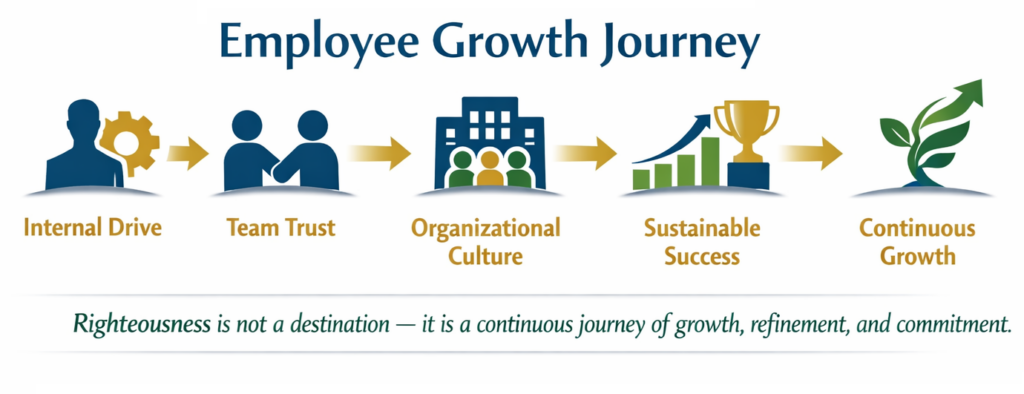
Figure 2: The Employee Growth Journey — From Individual to Career Success
This process diagram illustrates the progression from individual employee motivation to career success. The five stages show how personal values lead to team trust, organizational culture, sustainable success, and continuous growth. The diagram emphasizes the compounding, reinforcing nature of the journey—each stage strengthens the next.
11. Conclusion: Your Journey Matters
You may not become CEO tomorrow. You may not be featured in a business magazine. But your journey matters (Frankl, 1959).
Every time you choose integrity, you build your reputation.
Every time you speak truth, you build trust.
Every time you do the right thing, you build a future that is solid — built on rock, not sand (Collins & Porras, 1996).
You are not just building a career. You are building a life.
And when your life is built on righteousness, you have nothing to fear — because your foundation is strong.
12. Invitation
Righteousness is not about being perfect. It is about moving in the right direction (Dweck, 2006).
If you want to grow in righteousness, start today:
- Know your values
- Speak truth
- Take responsibility
- Be patient with yourself
One decision at a time. One day at a time. You will get there.
References
Albert, S., & Whetten, D. A. (1985). Organizational identity. Research in Organizational Behavior, 7, 263–295.
Collins, J. C., & Porras, J. I. (1996). Built to last: Successful habits of visionary companies. Harper Business.
Costco. (2024). Costco Wholesale Corporation 2024 Annual Report. Costco.com.
Dweck, C. S. (2006). Mindset: The new psychology of success. Random House.
Frankl, V. E. (1959). Man’s search for meaning. Beacon Press.
Grant, A. M. (2013). Give and take: Why helping others drives our success. Penguin Books.
Ohno, T. (1995). Toyota production system: Beyond large-scale production. Productivity Press.
Pink, D. H. (2009). Drive: The surprising truth about what motivates us. Riverhead Books.
Sinegal, J. (2014, July 14). Interview with Forbes. Forbes.
Spear, S. J. (1999). Decoding the DNA of the Toyota Production System. Harvard Business Review, 77(5), 96–106.
Toyota Motor Corporation. (n.d.). Toyota Production System: Vision and philosophy. Toyota-Global.com.