
A Practical Guide for Business Leaders and HR Decision-Makers
Abstract
This article presents a comprehensive framework of motivational factors organized into 5 core clusters designed to help business leaders and HR professionals cultivate a workforce that prioritizes righteousness over short-term profit. Drawing on established organizational behavior research and case studies from Toyota, Costco, and Singapore, we argue that righteousness—the alignment of values, actions, and incentives—is not merely a moral imperative but a strategic advantage. When organizations embed righteousness into their operational DNA, employees no longer see a trade-off between “doing the right thing” and “pursuing profit”—they recognize righteousness as the most reliable path to sustainable success. This article provides leaders with practical tools, including priority factors and application frameworks, to translate these principles into actionable organizational change.
1. Introduction: A Critical Shift for Business Leaders
Every business leader has faced the following dilemmas:
- When a client demands a lower price that requires compromising on quality—should you hold the line or concede?
- When a competitor wins orders through unethical means—should you follow suit or stay the course?
- When short-term profits conflict with long-term values—should you prioritize the present or invest in the future?
The answers to these questions determine not only the character of an organization but also its long-term viability. As research on organizational identity demonstrates, the values an organization embodies shape employee behavior, stakeholder trust, and ultimately financial performance (Albert & Whetten, 1985).
The central challenge for business leaders today is this: How do you cultivate a workforce that genuinely believes righteousness matters more than immediate profit or personal gain?
This is not a moral question—it is a management question. It cannot be solved through exhortation alone. It requires a systematic framework that enables employees to experience the tangible value of righteousness in their daily work.
To prevent overwhelm, we have organized the motivational factors into 5 core clusters, each with clear sub-categories. This structure makes the framework accessible, memorable, and actionable for companies of any size.
2. The Five Clusters of Righteous Motivation
This table 1 provides a high-level overview of the 5 clusters that organize the motivational factors. Each cluster represents a distinct dimension of motivation that business leaders can develop within their organizations.
Table 1: The Five Clusters — Overview
| Cluster | Core Theme | Key Message for Employees |
|---|---|---|
| 1. Inner Core | Who you are as a person | Righteousness begins within each employee |
| 2. Relational | Who you work with | Righteousness is built through team trust |
| 3. Meaning & Achievement | What you aim for at work | Righteousness gives purpose to daily tasks |
| 4. Ethical Foundation | What your company stands for | Righteousness requires organizational courage |
| 5. Resilience & Growth | How your company endures | Righteousness grows through challenges |
3. The Righteous Motivation Tree for Organizations
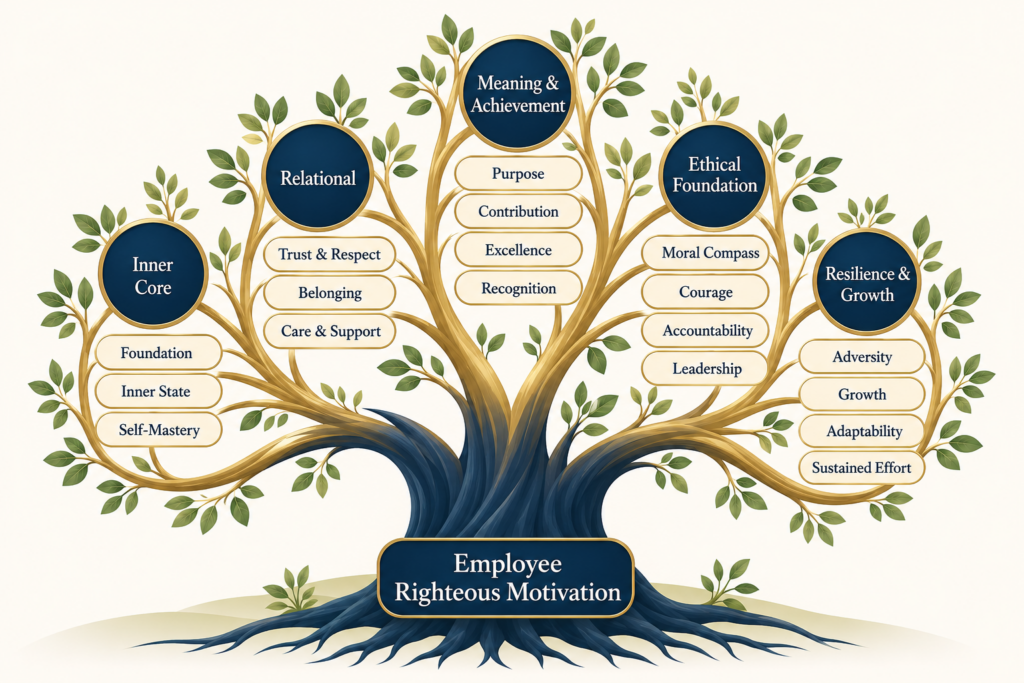
Figure 1: The Righteous Motivation Tree — 5 Clusters of Employee Motivational Factors
This diagram presents all motivational factors in a tree structure with 5 main branches (clusters) and sub-branches (sub-clusters). The tree metaphor emphasizes how employee motivation grows organically when the right organizational conditions are in place.
4. Cluster 1: Inner Core — Developing Employee Character
The foundation of personal strength and integrity. Righteousness begins within each employee. These factors shape an employee’s internal world—their values, sense of self, and capacity for self-mastery. This cluster contains 11 factors organized into 3 sub-clusters.
The table 2 presents the Inner Core factors organized into 3 sub-clusters: Foundation, Inner State, and Self-Mastery. Each factor is defined with a rationale explaining how it helps employees prioritize righteousness over short-term profit.
Table 2: Inner Core Factors
| Sub-Cluster | Factor | Definition | Why This Helps Employees Choose Righteousness |
|---|---|---|---|
| Foundation | ROCK | Unshakeable values and principles | Employees with firm convictions are not swayed by short-term incentives |
| Foundation | GROUNDEDNESS | Stability and rootedness | Pursuing profit is like walking a tightrope; pursuing righteousness is like standing on solid rock |
| Foundation | INTEGRITY | Consistency between words and actions | Integrity is a personal asset more valuable than money; once lost, it cannot be recovered |
| Foundation | DIGNITY | Basic human worth | Money can buy goods, but it cannot buy dignity |
| Inner State | PEACE | Inner calm from a clear conscience | Wealth may bring comfort, but only righteousness brings peace of mind |
| Inner State | CONFIDENCE | Certainty of being on the right path | Knowing you did the right thing is more empowering than knowing your earnings |
| Inner State | NO FEAR | Courage to bear consequences | When employees believe they are doing right, fear of blame or sacrifice diminishes |
| Inner State | CLEAR CONSCIENCE | Being answerable to oneself | Material gains fade; a clear conscience endures |
| Self-Mastery | TEMPERANCE | Self-restraint against greed | Only those who can say “enough” are truly free |
| Self-Mastery | CONTENTMENT | Satisfaction with what is sufficient | The pursuit of profit is never-ending; righteousness brings fulfillment in what is truly valuable |
| Self-Mastery | AUTHENTICITY | Being true to oneself | Pretending for profit consumes psychological energy |
Managerial Implication: When employees possess a strong Inner Core, they require less external oversight. They become self-managing, self-disciplined, and self-motivated. They are, in essence, employees who do not need to be managed—only to be led.
Key Question for Leaders: Is your company nurturing these inner drivers, or is your corporate culture undermining them?
5. Cluster 2: Relational — Building Trust in the Workplace
The power of connection and belonging. Righteousness is built together through workplace relationships. These factors tap into our fundamental need for connection, trust, and community at work. This cluster contains 14 factors organized into 3 sub-clusters.
The table 3 presents the Relational factors organized into 3 sub-clusters: Trust & Respect, Belonging, and Care & Support. Each factor is defined with a rationale explaining how it strengthens employee commitment to righteousness.
Table 3: Relational Factors
| Sub-Cluster | Factor | Definition | Why This Helps Employees Choose Righteousness |
|---|---|---|---|
| Trust & Respect | TRUST BY OTHERS | Being relied upon by colleagues and leaders | Trust is the world’s most precious asset—far harder to earn than money |
| Trust & Respect | RESPECT | Being genuinely esteemed by others | Profit can buy flattery, but it cannot buy genuine respect from teammates |
| Trust & Respect | HONOR | Self-respect and respect from others | Honor provides a more lasting satisfaction than quarterly bonuses |
| Belonging | BELONGING | Being part of a meaningful group | Teams united by profit dissolve when profit fades; teams united by belief endure |
| Belonging | LOYALTY | Mutual faithfulness in relationships | Loyalty is a two-way street—when you are loyal to your company, it is loyal to you |
| Belonging | COMPANIONSHIP | Walking alongside like-minded peers | On the path of righteousness, employees are never alone |
| Belonging | UNITY | Standing together with others | Unity is more powerful than individual self-interest |
| Care & Support | LOVE | Genuine care for others at work | Love drives action beyond self-interest |
| Care & Support | EMPATHY | Understanding and caring for colleagues’ situations | When you feel another’s pain, you transcend selfish calculation |
| Care & Support | SOLIDARITY | Sharing both joy and hardship with coworkers | The pursuit of profit is lonely; the pursuit of righteousness is shared |
| Care & Support | AFFIRMATION | Being recognized and encouraged by others | Affirmation from colleagues outlasts any financial reward |
Managerial Implication: Companies that foster genuine connection—where employees feel a bond with colleagues, leaders, and the organization itself—create a powerful “social adhesive.” This adhesive makes employees reluctant to betray those who trust them, even when tempted by short-term profit.
Key Question for Leaders: Is your company building connections among employees, or is your culture creating isolation?
6. Cluster 3: Meaning & Achievement — Connecting Work to Purpose
Purpose, impact, and the drive to excel. Righteousness gives purpose to work. When employees see their daily tasks as meaningful, they transcend self-interest. This cluster contains 17 factors organized into 4 sub-clusters.
The table 4 presents the Meaning & Achievement factors organized into 4 sub-clusters: Purpose, Contribution, Excellence, and Recognition. Each factor is defined with a rationale explaining how it helps employees find meaning beyond profit.
Table 4: Meaning & Achievement Factors
| Sub-Cluster | Factor | Definition | Why This Helps Employees Choose Righteousness |
|---|---|---|---|
| Purpose | MEANING | Deeper value in one’s work | Those who work only for money never find true fulfillment |
| Purpose | PURPOSE | Knowing why you do what you do | Purpose drives people to transcend self-interest |
| Purpose | VISION | Seeing a better future for the company | Vision enables people to sacrifice present gain for a greater future |
| Purpose | HOPE | Positive expectation for the organization’s future | Righteousness creates a sustainable future; short-term gain depletes it |
| Contribution | CONTRIBUTION | Positive impact on others and society | Profit is taking; righteousness is giving |
| Contribution | SERVICE | Contributing to customers and community | Serving others brings a fulfillment far beyond self-interested gain |
| Contribution | LEGACY | Leaving something worth remembering | Profit fades; the impact of righteousness endures |
| Excellence | EXCELLENCE | Pursuit of the highest standard | Profit-driven people settle for “good enough”; righteousness-driven people pursue “best” |
| Excellence | ACHIEVEMENT | Accomplishing something praiseworthy | True achievement requires overcoming obstacles—not taking the easy path to profit |
| Excellence | PROGRESS | Seeing growth in self and others | Profit is a number; progress is a direction |
| Recognition | PROUD | Justifiable pride in one’s actions | Those who compromise for profit cannot truly be proud of their work |
| Recognition | REPUTATION | A good name built over time | Short-term gains can destroy a reputation built over decades; righteousness builds it |
| Recognition | INFLUENCE | Positively shaping others | True influence flows from values, not from wealth |
| Recognition | INSPIRATION | Inspiring colleagues to goodness | Inspiring others is more valuable than accumulating wealth |
Managerial Implication: When employees understand how their work connects to a larger purpose, their motivation transcends money. They no longer need to be “motivated” from the outside—they are already propelled by an internal sense of mission.
Key Question for Leaders: Is your company helping employees see the meaning in their daily work?
7. Cluster 4: Ethical Foundation — Building a Company of Integrity
Moral compass, courage, and accountability. Righteousness requires organizational courage. These factors help employees and companies stand firm in the face of pressure and temptation. This cluster contains 15 factors organized into 4 sub-clusters.
The table 5 presents the Ethical Foundation factors organized into 4 sub-clusters: Moral Compass, Courage, Accountability, and Leadership. Each factor is defined with a rationale explaining how it builds an ethical organizational culture.
Table 5: Ethical Foundation Factors
| Sub-Cluster | Factor | Definition | Why This Helps Employees Choose Righteousness |
|---|---|---|---|
| Moral Compass | JUSTICE | Fair treatment for all employees and stakeholders | Profit may sacrifice others; righteousness ensures everyone is treated fairly |
| Moral Compass | HONESTY | Truthfulness with self and others | Honesty is the only path to trust—and the foundation of sustainable business success |
| Moral Compass | TRUTH | Commitment to reality over deception | The long-term power of truth far outweighs the short-term gain of falsehood |
| Moral Compass | CONSCIENCE | Listening to the inner voice | Those who choose conscience over profit ultimately earn respect |
| Courage | COURAGE | Doing the right thing even when it is difficult | Courage enables people to stand firm in the face of temptation |
| Courage | MORAL COURAGE | Paying the price to do what is right | This is the defining factor that separates righteousness from self-interest |
| Courage | NO FEAR | Courage to bear consequences | When employees believe they are doing right, fear of blame or sacrifice diminishes |
| Accountability | RESPONSIBILITY | Taking ownership of one’s actions | Short-term gain from avoiding responsibility leads to long-term loss |
| Accountability | ACCOUNTABILITY | Willingness to face consequences | Accountability builds character; avoidance diminishes it |
| Accountability | TRANSPARENCY | Openness rather than concealment | Transparency builds trust; concealment breeds suspicion |
| Leadership | BELIEF | Faith in the power of righteousness | Belief sustains people through difficulty; profit-driven people give up when times get tough |
| Leadership | ROLE MODEL | Being an example for others | Being a role model is more valuable than accumulating wealth |
| Leadership | INTEGRITY | Consistency between words and actions | Integrity is a personal asset more valuable than money; once lost, it cannot be recovered |
Managerial Implication: Ethics and courage serve as the organization’s “firewall.” When employees face pressure, these factors help them make the right choice. The most powerful influence on these factors is the behavior of company leaders.
Key Question for Leaders: Are your company’s leaders demonstrating moral courage in their daily actions?
8. Cluster 5: Resilience & Growth — Sustaining Righteousness Through Challenges
Perseverance, learning, and continuous organizational development. Righteousness grows through challenge. These factors help employees and companies persist, adapt, and become stronger. This cluster contains 17 factors organized into 4 sub-clusters.
The table 6 presents the Resilience & Growth factors organized into 4 sub-clusters: Adversity, Growth, Adaptability, and Sustained Effort. Each factor is defined with a rationale explaining how it helps organizations maintain righteousness through difficult times.
Table 6: Resilience & Growth Factors
| Sub-Cluster | Factor | Definition | Why This Helps Employees Choose Righteousness |
|---|---|---|---|
| Adversity | RESILIENCE | Perseverance through adversity | Those who compromise for profit give up easily; those who stand for righteousness persist |
| Adversity | HOPE | Positive expectation for the company’s future | Righteousness creates a sustainable future; short-term gain depletes it |
| Adversity | DETERMINATION | Resolve to continue despite difficulty | Determination keeps people on the righteous path when the easy path beckons |
| Growth | PROGRESS | Seeing growth in self and others | Profit is a number; progress is a direction |
| Growth | EXCELLENCE | Pursuit of the highest standard | Profit-driven people settle for “good enough”; righteousness-driven people pursue “best” |
| Growth | MASTERY | Deep competence and skill development | Mastery builds the confidence to stand firm in one’s convictions |
| Adaptability | FLEXIBILITY | Adjusting approach while maintaining principles | Flexibility enables companies to find new ways to do right when circumstances change |
| Adaptability | LEARNING | Continuous acquisition of wisdom | Learning helps organizations make better judgments about what righteousness requires |
| Adaptability | PATIENCE | Endurance in the face of delay | Patience allows righteousness to prevail over the rush for quick profit |
| Sustained Effort | PERSEVERANCE | Steady persistence in righteous action | Perseverance outlasts the temptation to take shortcuts |
| Sustained Effort | DEDICATION | Commitment to a righteous path | Dedication makes righteousness a priority, not an afterthought |
| Sustained Effort | ENDURANCE | Strength to continue despite exhaustion | Endurance enables organizations to maintain righteousness even when it is costly |
Managerial Implication: Companies that foster resilience and growth create employees who not only survive challenges but thrive through them. They view obstacles as opportunities to strengthen their commitment to righteousness rather than reasons to abandon it.
Key Question for Leaders: Does your company support employees through difficult times, or does it abandon them when challenges arise?
9. How to Empower Employee Motivation: From Profit to Righteousness
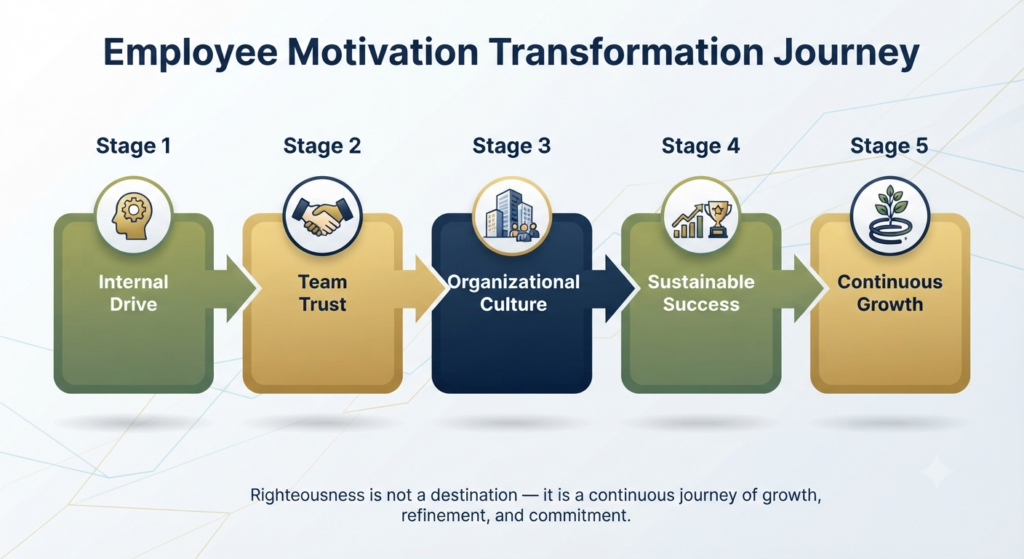
Figure 2: The Employee Motivation Transformation Journey
This process diagram illustrates the progression from individual employee motivation to organizational culture transformation. The five stages show how companies can guide employees from a profit-first mindset to a righteousness-first mindset. Each stage reinforces the next, creating a self-sustaining cycle of ethical excellence.
10. Practical Application for Business Leaders
This table 7 provides actionable recommendations for business leaders to translate the five clusters into concrete organizational practices.
Table 7: How to Apply These Factors in Your Company
| Cluster | How to Apply | Expected Outcome |
|---|---|---|
| Inner Core | Hire for values, not just skills; provide ethics training; recognize employees who demonstrate integrity | Employees with strong moral foundation who resist short-term temptations |
| Relational | Build team trust through transparency; create mentorship programs; foster collaboration over competition | A connected workforce that supports each other in doing right |
| Meaning & Achievement | Connect daily work to company mission; share impact stories; celebrate meaningful contributions | Employees who see purpose in their work and go beyond self-interest |
| Ethical Foundation | Leaders model ethical behavior; create safe reporting channels; reward moral courage | An organization that stands firm even under pressure |
| Resilience & Growth | Support employees through challenges; invest in continuous learning; celebrate perseverance | A resilient organization that grows stronger through adversity |
11. The Business Case for Righteousness: Evidence from the Field
The framework presented above is not theoretical—it is validated by real-world business success. Consider the following examples:
Toyota empowered frontline workers to stop production lines when they detected quality issues. This respect for worker judgment (Inner Core) and trust in their capabilities (Relational) created a culture of quality that saved billions in recall costs and built decades of brand loyalty.
Costco pays above-market wages and provides exceptional benefits to employees. This alignment of compensation with values (Ethical Foundation) created a workforce with extremely low turnover and high customer satisfaction, proving that righteousness drives profitability.
These cases demonstrate a consistent pattern: organizations that prioritize righteousness outperform those that prioritize short-term profit.
12. Summary: The Five Clusters at a Glance
This table 8 provides a comprehensive summary of all 5 clusters with their sub-clusters and factor counts, offering a complete yet accessible reference for business decision-makers.
Table 8: Complete Overview of All Five Clusters for Business Leaders
| Cluster | Sub-Clusters | Factor Count | Key Business Outcome |
|---|---|---|---|
| 1. Inner Core | Foundation, Inner State, Self-Mastery | 11 | Employees with strong personal values |
| 2. Relational | Trust & Respect, Belonging, Care & Support | 14 | High-trust teams that support each other |
| 3. Meaning & Achievement | Purpose, Contribution, Excellence, Recognition | 17 | Employees who find purpose in their work |
| 4. Ethical Foundation | Moral Compass, Courage, Accountability, Leadership | 15 | An organization that stands firm ethically |
| 5. Resilience & Growth | Adversity, Growth, Adaptability, Sustained Effort | 17 | A company that grows stronger through challenges |
13. Conclusion: Making Righteousness a Daily Reality in Your Company
The core question for any organization is not “Do we have values?” but rather “Do our employees experience these values as real, every single day? “
If righteousness exists only on wall plaques, in employee handbooks, and in annual meeting speeches—it has no power.
But if righteousness exists:
- In every compensation decision
- In every promotion conversation
- In every choice made when serving a client
- In every leader’s daily behavior
- In every interaction between colleagues
Then righteousness becomes the company’s operating system—operating beneath every decision, every action, every relationship.
When righteousness becomes the company’s operating system, employees no longer face a trade-off between “righteousness” and “profit.” They discover that righteousness is the most reliable path to sustainable profit.
14. Invitation for Business Leaders
If you are interested in transforming these factors into concrete organizational action, Righteous Advisory can help you:
- Design a Righteous Growth Score (RGS) assessment tool for your company
- Build an organizational culture diagnostic system
- Develop leadership development and training programs
- Create a corporate values implementation plan
Righteousness builds reputation on rock. Reputation builds trust among the market. Trust builds profit from customers.
References
Albert, S., & Whetten, D. A. (1985). Organizational identity. Research in Organizational Behavior, 7, 263–295.
Collins, J. C., & Porras, J. I. (1996). Built to last: Successful habits of visionary companies. Harper Business.
Dweck, C. S. (2006). Mindset: The new psychology of success. Random House.
Frankl, V. E. (1959). Man’s search for meaning. Beacon Press.
Grant, A. M. (2013). Give and take: Why helping others drives our success. Penguin Books.
Lee, K. Y. (2000). From Third World to First: The Singapore story, 1965–2000. HarperCollins.
Ohno, T. (1995). Toyota production system: Beyond large-scale production. Productivity Press.
Pink, D. H. (2009). Drive: The surprising truth about what motivates us. Riverhead Books.
Sinegal, J. (2014, July 14). Interview with Forbes. Forbes.
Spear, S. J. (1999). Decoding the DNA of the Toyota Production System. Harvard Business Review, 77(5), 96–106.
Toyota Motor Corporation. (n.d.). Toyota Production System: Vision and philosophy. Toyota-Global.com.