

When Clean Government Becomes a Competitive Advantage: The Economics of Singapore’s Anti-Corruption Model
Metadata
| Field | Content |
|---|---|
| Industry | Government / Public Sector |
| Primary RSS Layer | Layer 4: Structure — Clear organizational architecture and independent institutions ensure righteous outcomes |
| Secondary RSS Layer | Layer 7: Restoration — Severe punishment restores public trust and deters future violations |
| Related Pillars | Right Judgment . Lawful Motivation |
| Core Theme | Clean Governance . Institutional Design . National Competitiveness |
Context
Singapore is a city-state with an area of just 728 square kilometers and no natural resources. When it gained independence in 1965, it faced an existential crisis: no water, no hinterland, no resources. Its only true asset was its strategic geographic location—and the determination of its leadership. Under the leadership of Lee Kuan Yew, Singapore built a national brand based on its integrity, efficiency, and rule of law.
Lee Kuan Yew was familiar with the corrupt practices prevailing in the then government. He was convinced that corruption would deter economic progress in the country. In the 1959 election, the People’s Action Party (PAP) campaigned against the Government’s corrupt practices. After the elections, his team turned up in all-white as a promise to the people that their leaders “will not stand for corruption and will be ‘whiter than white’”.
The Operational Tension
The core tension faced by developing countries is the trade-off between governance costs and capital attraction. Corruption, bureaucracy, and legal uncertainty constitute “hidden costs” for international investors. Investors may accept higher taxes, but they will not tolerate unpredictable regulatory environments, politically arbitrary enforcement, or systemic corruption.
The dilemma was existential: How does a country with no natural resources attract global capital?
Singapore’s answer: Institutionalize integrity as the country’s operating system.
The Mechanism: Institutional Design for Clean Governance
Singapore embedded “integrity” directly into its national competitiveness model through a comprehensive corruption control framework with four key pillars: laws, adjudication, enforcement, and public administration, underpinned by political will and leadership.
1. Political Will: Leadership from the Top
The political will to eradicate corruption was established by Singapore’s founding Prime Minister, Lee Kuan Yew, when the PAP was elected into government in 1959. The PAP was determined to build an incorruptible and meritocratic government, and took decisive and comprehensive action to stamp out corruption from all levels of Singapore’s society. As a result, a culture of zero tolerance against corruption has become ingrained into the Singapore psyche and way of life.
2. Laws: Strict Legislation with Broad Scope
Singapore relies on two key legislations to fight corruption:
| Legislation | Purpose |
|---|---|
| Prevention of Corruption Act (PCA) | Applies to persons who give or receive bribes in both the public and private sector |
| Corruption, Drug Trafficking and Other Serious Crimes Act (CDSA) | Confiscates ill-gotten gains from corrupt offenders |
Together, the two laws ensure that corruption remains a high-risk, low-rewards activity.
3. Adjudication: An Independent Judiciary
In Singapore, an independent judiciary provides insulation from political interference. The Chief Justice is appointed by the President on advice from the Prime Minister and the Council of Presidential Advisers. Various provisions of the Constitution also guarantee the independence of the Supreme Court judiciary. The judiciary recognizes the seriousness of corruption and adopts a stance of deterrence by meting out stiff fines and imprisonment.
4. Enforcement: The Corrupt Practices Investigation Bureau (CPIB)
The Corrupt Practices Investigation Bureau (CPIB) is the sole agency responsible for combating corruption in Singapore. The CPIB is under the Prime Minister’s Office (PMO) and reports directly to the Prime Minister, enabling the CPIB to operate independently.
Through more than 60 years of corruption-fighting, a deterrent stance has always been adopted, ensuring that there are no cover-ups and corruption is fought without fear or favour. The CPIB was originally established in 1952 by the British colonial government. After assuming office as first Prime Minister, Lee Kuan Yew moved CPIB to the Prime Minister’s Office.
CPIB’s proactive strategies, including increased salaries for civil servants and strict enforcement of corruption laws, have contributed to a transparent system that appeals to investors and fosters economic stability.
5. Competitive Public Sector Salaries
Lee Kuan Yew adopted a carrot and stick approach to combat corruption. In the 1980s, Lee enacted salary raises for senior level government officials and politicians. This was enhanced repeatedly in 1973, 1979, 1982, 1989, and 1994 to bring the salaries on par with the well-paid private sector.
“With high economic growth and higher earnings in the private sector, ministers’ salaries have to match their counterparts’ in the private sector. Underpaid ministers and public officials have ruined many governments in Asia. Adequate remuneration is vital for high standards of probity in political leaders and high officials.”
6. Meritocracy in Public Administration
The practice of meritocracy in the Public Service, together with regular reviews of administrative rules and processes to improve efficiency, also reduces the opportunities for corruption. The Singapore Public Service is guided by a Code of Conduct, which sets out the high standards of behavior expected of public officers based on principles of integrity, incorruptibility, and transparency.
Table 1: Singapore’s Corruption Control Framework — The Four Pillars
Description: This table outlines the four key pillars of Singapore’s anti-corruption framework, demonstrating how institutional structure (RSS Layer 4) ensures righteous governance outcomes.
| Pillar | Mechanism | Outcome |
|---|---|---|
| Political Will | Leadership commitment from the top; zero-tolerance culture | Ingrained anti-corruption mindset across society |
| Laws | PCA (1960) + CDSA — broad scope, strict penalties | Corruption is high-risk, low-rewards |
| Adjudication | Independent judiciary; constitutional protections | Fair, impartial enforcement |
| Enforcement | CPIB — independent, reports directly to PM | No cover-ups, fought without fear or favour |
| Public Administration | Meritocracy + competitive salaries + Code of Conduct | Attracts and retains top talent |
The Financial Calculus: The ROI of Integrity
Singapore’s anti-corruption model is not merely a moral stance—it is a strategic economic calculation.
1. Reduced “Hidden Costs” for Investors
International investors, when evaluating markets, consider not only taxes and labor costs but also the risk premium. In corrupt jurisdictions, investors demand higher returns to compensate for the risks of bribery, expropriation, or legal uncertainty. Singapore’s clean system reduces this risk premium, allowing the country to attract capital on more favorable terms.
The rule of law plays a pivotal role in shaping an efficient legal framework that protects intellectual property rights, attracts foreign investments, and ensures a fair legal system for local and international businesses alike. Establishing a trusted judicial system and providing regulatory clarity has positioned Singapore as a hub for international dispute resolution and a key location for companies seeking a secure environment for innovation.
2. Global Recognition and Rankings
Singapore’s integrity has been consistently validated by international rankings:
| Ranking Organization | Singapore’s Position | Year |
|---|---|---|
| Transparency International CPI | 3rd least corrupt (score 84/100), top in Asia-Pacific | 2024 |
| World Justice Project Rule of Law Index | 3rd for absence of corruption, top Asian nation | 2024 |
| Political & Economic Risk Consultancy (PERC) | 1st least corrupt in Asia | 2024 |
| World Bank Governance Indicators | Government effectiveness (99.5), control of corruption (96.7), regulatory quality (100), rule of law (95.3) | 2013 |
3. Attracting Global Capital
Singapore’s clean governance has made it a magnet for multinational corporations. The country hosts over 3,700 regional headquarters of multinational companies. Political stability—maintained through long-term governance by the ruling PAP—has cultivated a landscape that supports infrastructure investment and scientific research.
Government effectiveness has been vital for implementing and sustaining good governance practices. The government has developed digital solutions and streamlined processes, such as the efficient startup registration process that takes just over a day, significantly faster than regional averages.
4. Attracting Top Talent
Integrity and high public sector salaries attract and retain the best talent. Singapore’s public service is one of the world’s most efficient, further enhancing the country’s competitiveness.
Table 2: The Economics of Integrity — Singapore’s Competitive Advantage
Description: This table demonstrates how Singapore’s clean governance model transforms integrity into tangible economic benefits.
| Dimension | Impact | Economic Outcome |
|---|---|---|
| Reduced Risk Premium | Investors require lower returns due to predictability | Lower cost of capital |
| Rule of Law | Contracts enforced; property rights protected | Increased foreign direct investment |
| Regulatory Efficiency | Startup registration in ~1 day | Faster business creation |
| Political Stability | Long-term policy consistency | Attracts long-term investment |
| Talent Attraction | Competitive public sector salaries | High-quality governance |
| Global Reputation | Top rankings in CPI, Rule of Law | “Singapore brand” premium |
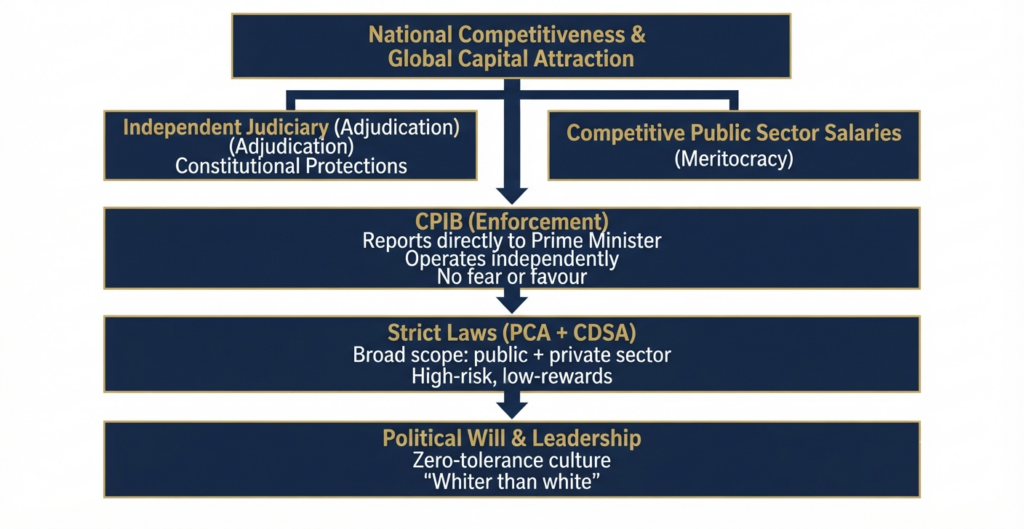
Figure 1: Singapore’s Governance Architecture — The Institutional Framework
This Figure 1 diagram illustrates Singapore’s multi-layered governance architecture, showing how each institutional layer supports the overarching goal of clean governance and national competitiveness.
Analysis: A Righteous Advisory Perspective (RSS Framework)
Through the lens of the RSS Seven-Layer Framework, Singapore’s governance model provides a masterclass in how institutional design can embed righteousness into the fabric of a nation:
RSS Layer 4: Structure — Clear Organizational Architecture Ensures Righteous Outcomes
Singapore’s most powerful practice of righteousness lies in its institutional structure. The CPIB is not merely an agency—it is an independent body that reports directly to the Prime Minister, enabling it to operate without interference. The judiciary is constitutionally protected from political interference. The Public Service Commission is an independent body responsible for recruitment, promotion, and discipline of public officers.
Key Insight: Righteousness requires structural independence. When enforcement agencies are independent from the entities they investigate, integrity becomes institutionalized rather than dependent on individual virtue.
RSS Layer 7: Restoration — Severe Punishment Restores Public Trust
Singapore’s approach to restoration is twofold: deterrence through severe punishment and confiscation of ill-gotten gains. The judiciary adopts a stance of deterrence by meting out stiff fines and imprisonment towards corrupt offenders. The CDSA confiscates proceeds from corrupt offenders, ensuring that crime does not pay.
Key Insight: Restoration requires credible consequences. When violations are met with certain and severe punishment, trust in the system is restored and future violations are deterred.
Pillar: Right Judgment — Discerning Long-term Value
Singapore’s leadership rejected short-term populism (e.g., reducing official salaries to gain political popularity) in favor of long-term competitiveness—built on the rule of law and integrity. Lee Kuan Yew was severely criticized by the public and media. It was said that his pay was higher than that of the US President. He took it in stride and implemented his policies—and had the last laugh.
Pillar: Lawful Motivation — Internal Commitment to Legitimacy
Singapore’s system does not rely solely on external enforcement. It cultivates an internal culture where citizens and businesses trust that the system is fair. As a result of the government’s unwavering political commitment and leadership, a culture of zero tolerance against corruption has become ingrained into the Singapore psyche and way of life.
This table provides a comprehensive mapping of how each of the seven RSS layers corresponds to a specific element in the Singapore case study. The “Core Focus” and “Supporting” indicators show the relative emphasis of each layer in this analysis.
This table 3 provides a comprehensive mapping of how each of the seven RSS layers corresponds to a specific element in the Singapore case study. The “Core Focus” and “Supporting” indicators show the relative emphasis of each layer in this analysis.
Table 3: Singapore — RSS Seven-Layer Framework Complete Mapping
| RSS Layer | Layer Definition | Singapore Case Application | Emphasis |
|---|---|---|---|
| Layer 1: Fundamentals | Universal principles of righteousness (honesty, respect, responsibility, fairness) | Basic realities of governance: Governments must maintain public trust; corruption deters investment; rule of law is essential for economic development. These are unchanging principles Singapore built upon. | Background |
| Layer 2: Foundation | Core values and beliefs guiding righteous action; what the organization “believes in” | Zero-tolerance culture against corruption: Lee Kuan Yew’s conviction that corruption would deter economic progress. The PAP’s “whiter than white” promise established the foundational belief. | Supporting |
| Layer 3: Alignment | Aligning resources, incentives, and behaviors with core values; ensuring “what we say, do, and reward” are consistent | Competitive public sector salaries: Government declared “integrity is non-negotiable” and proved it by paying ministers market-competitive salaries, eliminating the temptation for corruption. | Supporting |
| Layer 4: Structure | Clear roles, responsibilities, and organizational architecture supporting righteousness | Independent CPIB + Judiciary: The CPIB reports directly to the Prime Minister, enabling independent enforcement. The judiciary is constitutionally protected from political interference. Clear, unambiguous authority and separation. | ⭐⭐⭐ Core Focus |
| Layer 5: Process | Standardized processes that produce righteous outcomes; turning values into repeatable daily operations | Streamlined regulatory processes: Startup registration takes just over a day. Meritocracy in public administration with regular reviews of administrative rules to improve efficiency and reduce corruption opportunities. | Supporting |
| Layer 6: Assurance | Evaluation, verification, and validation mechanisms confirming righteousness is being practiced | Global rankings as verification: Transparency International CPI (#3 globally), World Justice Project Rule of Law (#3), PERC (#1 in Asia). These external rankings provide independent validation of Singapore’s clean governance. | Supporting |
| Layer 7: Restoration | Correction, recovery, and improvement when righteousness is broken; how to become stronger | Severe punishment + asset confiscation: The judiciary adopts a deterrent stance with stiff fines and imprisonment. CDSA confiscates ill-gotten gains, ensuring crime does not pay. This restores public trust and deters future violations. | ⭐ Supporting |
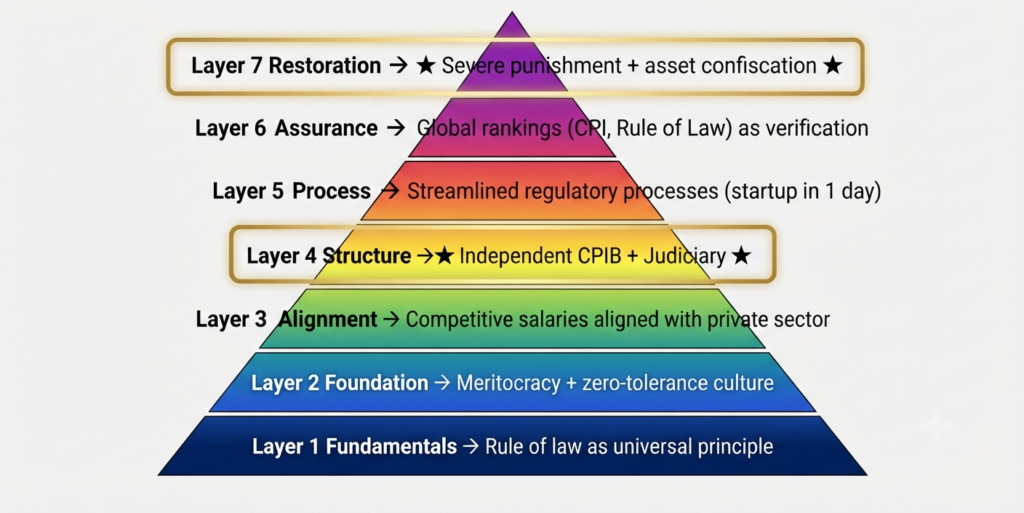
Figure 2: RSS Seven-Layer Framework Applied to Singapore
The vertical pyramid diagram in Figure 2 maps each of the seven RSS layers to its corresponding element in the Singapore case. Layer 4 (Structure) corresponds to “Independent CPIB + Judiciary,” and Layer 7 (Restoration) corresponds to “Severe Punishment + Asset Confiscation.” These two layers are highlighted in gold to indicate they are the core analytical dimensions of this case study.
Lessons for Government and Organizational Leaders
The Singapore case offers three critical takeaways for leaders in both the public and private sectors:
1. Integrity is a Competitive Advantage, Not a Cost
The distinction between viewing integrity as an expense (to be minimized) versus an investment (to be maximized) determines long-term national or organizational prosperity. Singapore’s success demonstrates that clean governance attracts global capital at lower cost.
2. Predictability Attracts Capital
Investors fear unpredictability more than high taxes. Transparent, consistent rules reduce the risk premium, making capital cheaper and more abundant. As the World Economic Forum noted: “Corruption is very low, the public sector is extremely efficient, and the government has a long-term vision”.
3. Talent Flows to Places with Dignity
The best talent will not work in corrupt, unfair systems. Building a system based on integrity attracts and retains top talent. Singapore’s competitive public sector salaries ensure that the “best and brightest” are attracted to public service.
Discussion Questions for Boardrooms and Policy Makers
- In your organization or country, is integrity viewed as a cost or a competitive advantage? Why?
- How do you measure the “hidden costs” of corruption (or the “integrity premium” of clean governance) in your context?
- What is the equivalent of Singapore’s CPIB in your organization—and is it truly independent?
- What “assurance mechanisms” does your organization use to verify that its values are being practiced?
References
Cambridge University Press. (2016). Governance and meritocracy: A study of policy implementation in Singapore. In The Role of the Public Bureaucracy in Policy Implementation in Five ASEAN Countries.
Corrupt Practices Investigation Bureau. (2025). 2024 TI CPI: Singapore rises 2 spots to 3rd least corrupt country in the world, top in Asia Pacific. CPIB.gov.sg.
Corrupt Practices Investigation Bureau. (n.d.). Singapore’s corruption control framework. CPIB.gov.sg.
Corruption.net. (2015, March 31). Singapore: Lee Kuan Yew’s fight against corruption.
Global Legal Insights. (2026). Bribery and corruption laws and regulations 2026 | Singapore.
Lee, K. Y. (2000). From Third World to First: The Singapore Story, 1965–2000. HarperCollins.
Transparency International. (2025). Corruption Perceptions Index 2024.
University of Tehran. (2025). The impact of good governance on the development of science and technology: A case study of Singapore. JPQ.ut.ac.ir.
World Bank. (2014). Worldwide Governance Indicators.
World Economic Forum. (2019). Global Competitiveness Report.
End of Case Study