

When Higher Pay Becomes a Competitive Advantage: The Economics of Costco’s Workforce Strategy
Metadata
| Field | Content |
|---|---|
| Industry | Corporate / Retail |
| Primary RSS Layer | Layer 3: Alignment — Aligning resources and incentives with core values |
| Secondary RSS Layer | Layer 6: Assurance — Employee retention as a measurable indicator of righteousness |
| Related Pillars | Integrity . Lawful Motivation |
| Core Theme | Fair Compensation . Worker Dignity . Long-term Profitability |
Context
In the retail industry—a sector defined by razor-thin margins and extreme cost-cutting—labor is typically viewed as the largest expense and therefore the primary target for reduction. Competitors like Walmart have long maximized shareholder value by compressing wages, benefits, and hours. Yet Costco Wholesale, founded in 1983 by Jim Sinegal and Jeffrey Brotman, charted a fundamentally different course (Costco, 2024).
Sinegal built the company on a principle that sounds more like advice from a grandfather than a corporate manifesto: “If you treat employees well, they’ll treat customers well, and the business will thrive” (en.as.com, 2026). While competitors raced to cut costs and push margins, Sinegal doubled down on efficiency, culture, and alignment—turning warehouse shopping into an experience millions love.
The Operational Tension
The core tension in retail is the trade-off between cost control and customer experience. Compressing labor costs can increase immediate margins, but typically at the expense of high employee turnover, declining service quality, and increased inventory shrinkage. Critics have long argued that Costco’s “high-wage” strategy—paying far above industry averages—was foolish on Wall Street’s terms because it eroded short-term profits.
Costco co-founder Jim Sinegal saw it differently. His famous response:
“When you pay enough wages so that employees can support their families, they stay. When they stay, they get better. When they get better, they become more productive. When they become more productive, you get lower costs.” (Sinegal, 2014)
The Mechanism: Fair Compensation and Internal Promotion
Costco’s wage model is almost anomalous in retail. According to recent data:
| Metric | Costco | Industry Average |
|---|---|---|
| Average Hourly Wage | Over $31 | ~$17–$18.50 |
| Minimum Hourly Wage | $20 (rising to $21) | Federal minimum: $7.25 |
| Annual Salary | ~$47,000 | ~$27,000 (Walmart) |
| Employee Turnover | 8% | 60% |
| Inventory Shrinkage | 0.11%–0.12% of sales | 1%–2% (industry average) |
| Member Renewal Rate | 92.1% (US/Canada) | ~70% (industry average) |
But this is not merely generosity. Costco combines this compensation with an internal promotion culture. The company prioritizes filling management positions from within—over 80% of managers are promoted internally. As CFO Gary Millerchip noted, these investments not only boost employee satisfaction but also reduce turnover, which positively impacts operational efficiency and customer service quality.
This is not charity; this is a strategic bet on human capital returns.
Table 1: The Costco “Fair Wage” Flywheel Effect
Description: This table illustrates the causal cycle of Costco’s compensation model—how higher wages create a self-reinforcing loop of efficiency and profitability.
| Stage | Mechanism | Outcome |
|---|---|---|
| 1 | Above-market wages and benefits | Attracts and retains quality talent |
| 2 | Extremely low employee turnover (8% vs. 60%) | Dramatically reduces recruitment and training costs |
| 3 | High employee satisfaction and service quality | Superior customer experience |
| 4 | Extremely low inventory shrinkage (0.11–0.12%) | Minimizes loss from theft and damage |
| 5 | High customer loyalty and member renewal (92.1%) | Stable, predictable revenue stream |
| 6 | Long-term high profitability | Reinvestment in employees (returns to Stage 1) |
The Financial Calculus: The ROI of Higher Wages
Sinegal (2014) summarized Costco’s logic simply. Let us examine each component:
1. Reduced Turnover — The Math
Costco’s employee turnover rate is 8%, compared to the retail industry average of 60%. This means Costco spends dramatically less each year on recruiting, onboarding, and training. In retail, replacing a salaried employee can cost 30–50% of their annual salary. For every employee Costco retains, it directly saves these expenses.
The math: If replacing an employee costs 150% of their annual salary, and Costco retains 52% more employees than the industry average, the cumulative savings are enormous.
2. Reduced Shrinkage — The Theft Factor
Inventory shrinkage—loss due to theft, damage, or administrative error—is one of retail’s largest hidden costs. Costco’s shrinkage rate is 0.11% to 0.12% of sales, compared to the industry average of 1.6%—nearly 15 times higher than Costco.
The math: For every $1 billion in sales, the average retailer loses $16 million to shrinkage. Costco loses approximately $1.1 million. That’s a $14.9 million annual advantage per $1 billion in revenue.
Costco’s CFO attributes this to the company’s store layout and membership model. Satisfied, well-compensated employees are less likely to steal and more willing to protect company assets.
3. Service Quality and Member Loyalty
Costco’s business model depends on membership fees, which constitute the majority of its profits. To keep customers renewing year after year, the customer experience must be exceptional. This is only possible when employees are well-trained, proactive, and genuinely care about service.
Costco’s US/Canada renewal rate stands at 92.1%, while the global rate remains at approximately 90%. Membership fees, though less than 2% of total revenue, are almost pure profit and support nearly 90% of operating income.
4. Productivity
Despite higher wages, Costco’s sales per employee far exceeds competitors. According to Forbes (2014), Costco’s sales per hourly employee significantly outperforms Walmart’s Sam’s Club.
Table 2: Cost-Benefit Analysis — The “High-Wage” Strategy
Description: This table compares the financial and operational outcomes of Costco’s approach versus the traditional retail model.
| Dimension | Traditional Retail Model | Costco Model |
|---|---|---|
| Wage Level | Low (minimum wage or slightly above) | High (65%+ above industry average) |
| Employee Turnover | High (60%) | Low (8%) |
| Recruitment/Training Cost | High (constant churn) | Low (stable workforce) |
| Inventory Shrinkage | High (1–2% of sales) | Low (0.11–0.12% of sales) |
| Service Quality | Inconsistent | Consistently high |
| Customer Loyalty | Low (~70% renewal) | High (92.1% renewal) |
| Long-term Profitability | Eroded by hidden costs | Enhanced by operational efficiency |
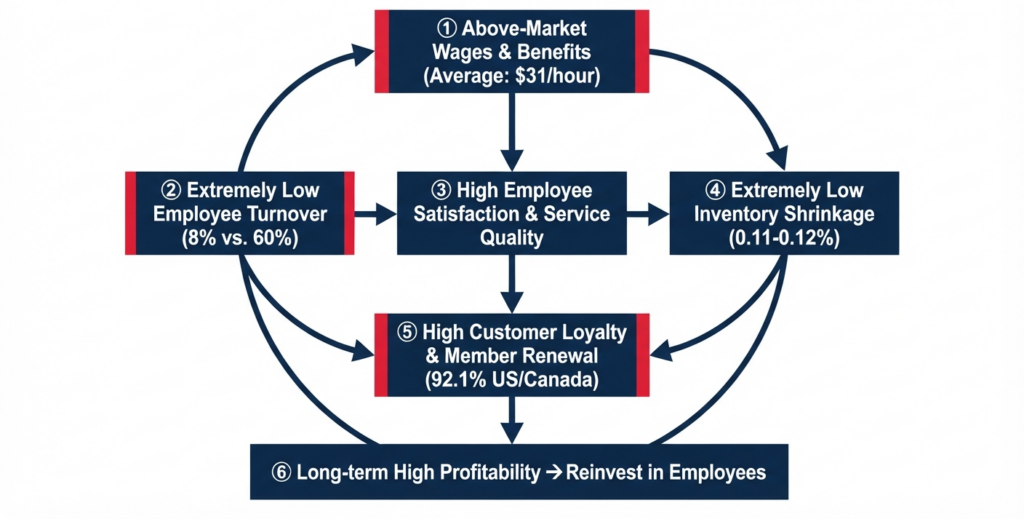
Figure 1: The Costco “Fair Wage” Flywheel
Figure 1 diagram visualizes the self-reinforcing cycle of Costco’s compensation model. Each stage feeds into the next, creating a virtuous loop that drives long-term profitability.
Analysis: A Righteous Advisory Perspective (RSS Framework)
Through the lens of the RSS Seven-Layer Framework, Costco’s model provides a compelling demonstration of how righteousness can be embedded into a corporate business model:
RSS Layer 3: Alignment — Aligning Resources and Incentives with Core Values
Costco’s most powerful practice of righteousness lies in the precise alignment of compensation with stated values. The company declares, “Our employees are our partners,” and then proves it with wages 65% above industry average. This alignment is not symbolic—it is quantifiable and measurable.
When values and compensation are aligned, employees do not need to choose between “making money” and “doing the right thing”—because they are the same thing.
Key Insight: Alignment means ensuring that what you say (values), what you pay (resources), and what you reward (incentives) all point in the same direction. Costco’s model demonstrates that misalignment is expensive—when employees are underpaid, the hidden costs (turnover, shrinkage, low productivity) erode profits.
RSS Layer 6: Assurance — Employee Retention as a Measurable Indicator
Costco uses employee retention as an assurance mechanism for its righteousness practice. An 8% turnover rate (vs. 60% industry average) is a verifiable metric proving that the compensation model actually works. This is not a claim; it is a data-confirmed fact.
Key Insight: Assurance requires measurable indicators. Costco’s low turnover is not just a happy outcome—it is an evidence-based validation that the company’s alignment strategy is functioning as intended.
Pillar: Integrity — Alignment of Values and Actions
Costco publicly declares, “Our employees are our partners.” Through above-market wages and benefits, the company aligns its operating expenses with its stated values. There is no gap between the words and the actions. Sinegal (2014) made this explicit: “This is not altruism. This is good business.”
Pillar: Lawful Motivation — Internal Commitment to Legitimacy
Costco’s system does not rely on minimum wage laws to ensure fairness. Instead, it cultivates an internal culture where employees are respected for their contributions and, in turn, respect the company. This commitment to fairness creates a positive work environment that reduces friction and transaction costs.
This table 3 provides a comprehensive mapping of how each of the seven RSS layers corresponds to a specific element in the Costco case study. The “Core Focus” and “Supporting” indicators show the relative emphasis of each layer in this analysis.
Table 3: Costco — RSS Seven-Layer Framework Complete Mapping
| RSS Layer | Layer Definition | Costco Case Application | Emphasis |
|---|---|---|---|
| Layer 1: Fundamentals | Universal principles of righteousness (honesty, respect, responsibility, fairness) | Basic realities of retail: Retail businesses need employees to serve customers; high turnover is expensive; inventory shrinkage erodes profits. These are the unchanging premises Costco must work within. | Background |
| Layer 2: Foundation | Core values and beliefs guiding righteous action; what the organization “believes in” | Respect for employees as partners: Costco believes employees are partners, not expenses. This is embedded in Sinegal’s founding philosophy and the company’s compensation structure. | Supporting |
| Layer 3: Alignment | Aligning resources, incentives, and behaviors with core values; ensuring “what we say, do, and reward” are consistent | Compensation aligned with values: Costco declares “employees are partners” and proves it with wages 65% above industry average. Capital expenditure (higher wages) aligns with stated values (worker dignity). | ⭐⭐⭐ Core Focus |
| Layer 4: Structure | Clear roles, responsibilities, and organizational architecture supporting righteousness | Internal promotion pathway: Over 80% of managers are promoted internally. Clear career progression supports the “partner” philosophy and reinforces fairness. | Supporting |
| Layer 5: Process | Standardized processes that produce righteous outcomes; turning values into repeatable daily operations | Internal promotion and training processes: Standardized systems for hiring, training, and promoting from within ensure the “partner” philosophy is operationalized daily. | Supporting |
| Layer 6: Assurance | Evaluation, verification, and validation mechanisms confirming righteousness is being practiced | 8% turnover rate as measurable indicator: Costco’s 8% turnover rate (vs. 60% industry average) is verifiable proof that the compensation model works. This is a data-confirmed validation. | ⭐ Supporting |
| Layer 7: Restoration | Correction, recovery, and improvement when righteousness is broken; how to become stronger | Continuous improvement of compensation structure: Costco regularly reviews and increases wages to maintain alignment with market conditions and employee needs, ensuring the system stays fair. | Supporting |
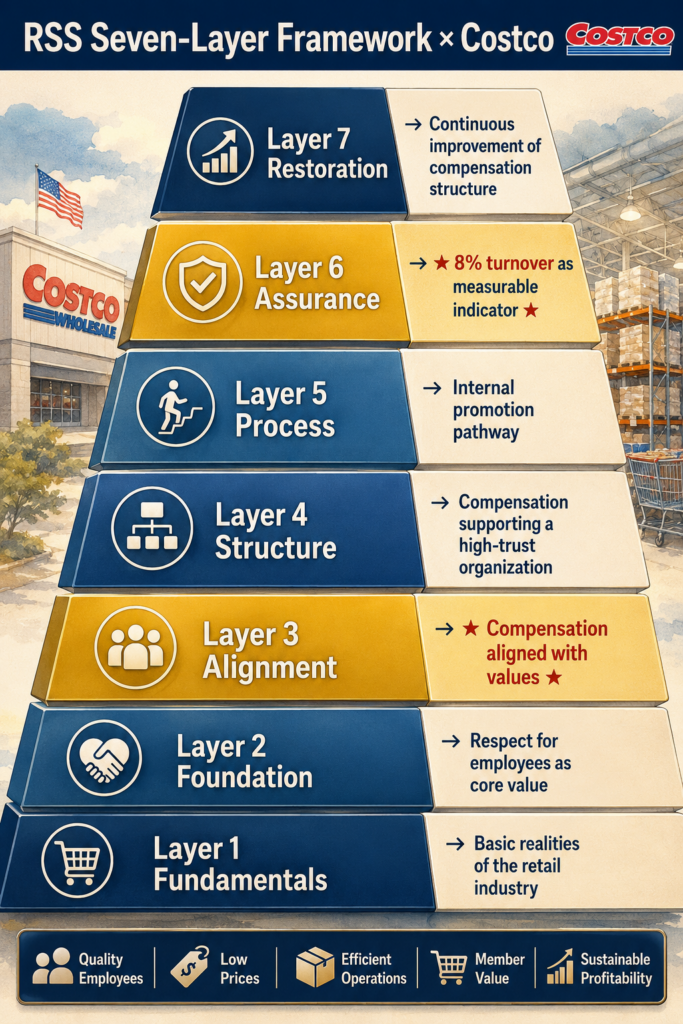
Figure 2: RSS Seven-Layer Framework Applied to Costco
In Figure 2, this vertical pyramid diagram maps each of the seven RSS layers to its corresponding element in the Costco case. Layer 3 (Alignment) corresponds to “Compensation Aligned with Values,” and Layer 6 (Assurance) corresponds to “8% Turnover as a Measurable Indicator.” These two layers are highlighted in gold to indicate they are the core analytical dimensions of this case study.
Lessons for the Executive Suite
The Costco case offers three critical takeaways for modern leaders:
1. Compensation is an Investment, Not a Cost
The distinction between viewing labor as an expense to be minimized versus an asset to be maximized determines long-term profitability. Costco’s model proves that higher wages can reduce overall costs by eliminating the hidden expenses of turnover, shrinkage, and low productivity.
2. The Flywheel Effect is Real
Higher wages → Lower turnover → Lower recruitment costs → Higher service quality → Higher customer loyalty → Higher profits → Reinvestment in employees. This is a self-reinforcing cycle. Once set in motion, it compounds over time.
3. Trust Reduces Transaction Costs
When employees feel fairly treated, they work harder, steal less, and provide better service. Trust is the world’s cheapest lubricant. Costco’s model demonstrates that investing in trust—through fair compensation—pays dividends across every dimension of the business.
Discussion Questions for Boardrooms
- In your industry, could “above-market compensation” become a competitive advantage? Why or why not?
- How do you measure the causal relationship between employee satisfaction and customer loyalty?
- If you treated labor as an asset rather than an expense, how would your hiring, training, and compensation strategies change?
- What “assurance mechanisms” does your organization currently use to verify that its values are being practiced?
References
Costco. (2024). Costco Wholesale Corporation 2024 Annual Report. Costco.com.
en.as.com. (2026, February 20). Jim Sinegal, Costco’s founder, “If you treat employees well, they’ll treat customers well, and the business will thrive”.
Forbes. (2014, July 14). Costco’s Jim Sinegal: Paying employees well is good business.
Harvard Business Review. (2011, December 20). Los minoristas deberían invertir más en los empleados.
Harvard Business Review. (2017, January 2). How 4 Retailers Became “Best Places to Work”.
Investopedia. (2024, September 27). Costco’s Average Hourly Wage Is Over $30. Here’s How That Stacks Up.
Nasdaq. (2022, August 27). Why Costco Checks Your Receipt and What It Looks for When You Leave.
Sinegal, J. (2014, July 14). Interview with Forbes. In Costco’s Jim Sinegal: Paying employees well is good business. Forbes.
End of Case Study